
By 2025 the need for fast reliable internet is now beyond the boundaries of the urban infrastructure. Many people who live in the countryside living with mobile homes or running businesses from remote regions accessing the online world is often beyond reach. Thats where the new capability in Satellite Internet comes to play.
It was once thought to be a last resort solution with slow speeds and slow response times Satellite Internet has seen a major change. It is largely driven by the new technology called LEO (LEO) constellations and now positioned as an effective and viable solution which promises to overcome the digital divide and bring together people who were not.
This complete guide will be your route to the exciting market of Satellite Internet in 2025. The guide will take you from the basic principles that govern how the technology operates and provide a comprehensive review of the top companies that are shaping the industry.
Then well look at the pros and cons of setting up the system evaluate the advantages and disadvantages and anticipate the future oriented world of connectivity. If youre a dissatisfied rural dweller tired of slow DSL as well as the digital nomad who wants to travel without sacrifice in speed or an enterprise manager who requires a stable backup system this manual will give you the insight necessary to make an educated decision regarding embracing Satellite Internet.
What is Satellite Internet Works: A journey starting from Earth through Orbit and back
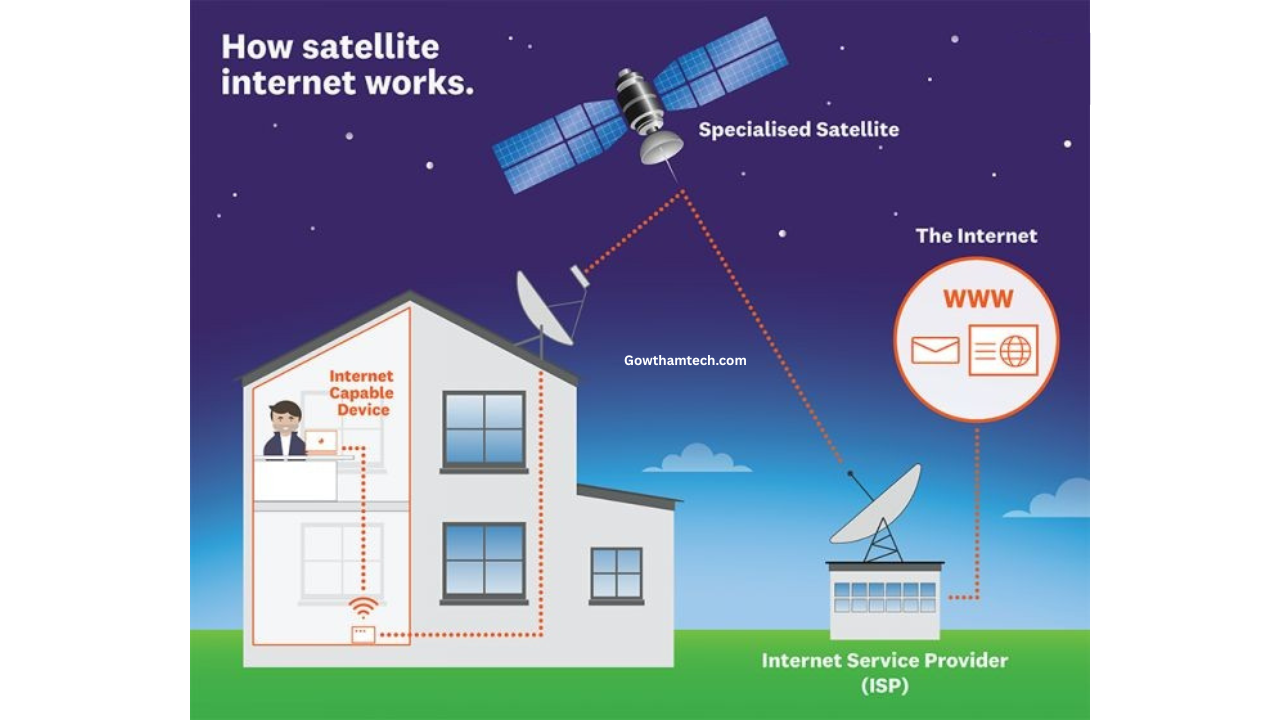
Knowing the process by which Satellite Internet delivers an internet connection that is broadband to your office or home is crucial to fully comprehend the capabilities as well as limitations. Its a complex 3 part cosmic dance that includes satellites ground stations as well as a terminal for users on your premises.
- “The ground Station (Gateway): Your journey on the Internet begins Earth in a ground station that is sometimes referred to as a gateway or Network Operations Center (NOC). They are connected to the super fast fiber optic backbone that forms the internet worldwide. If you input a web address into your browser the request will be sent by your device through the gateway.
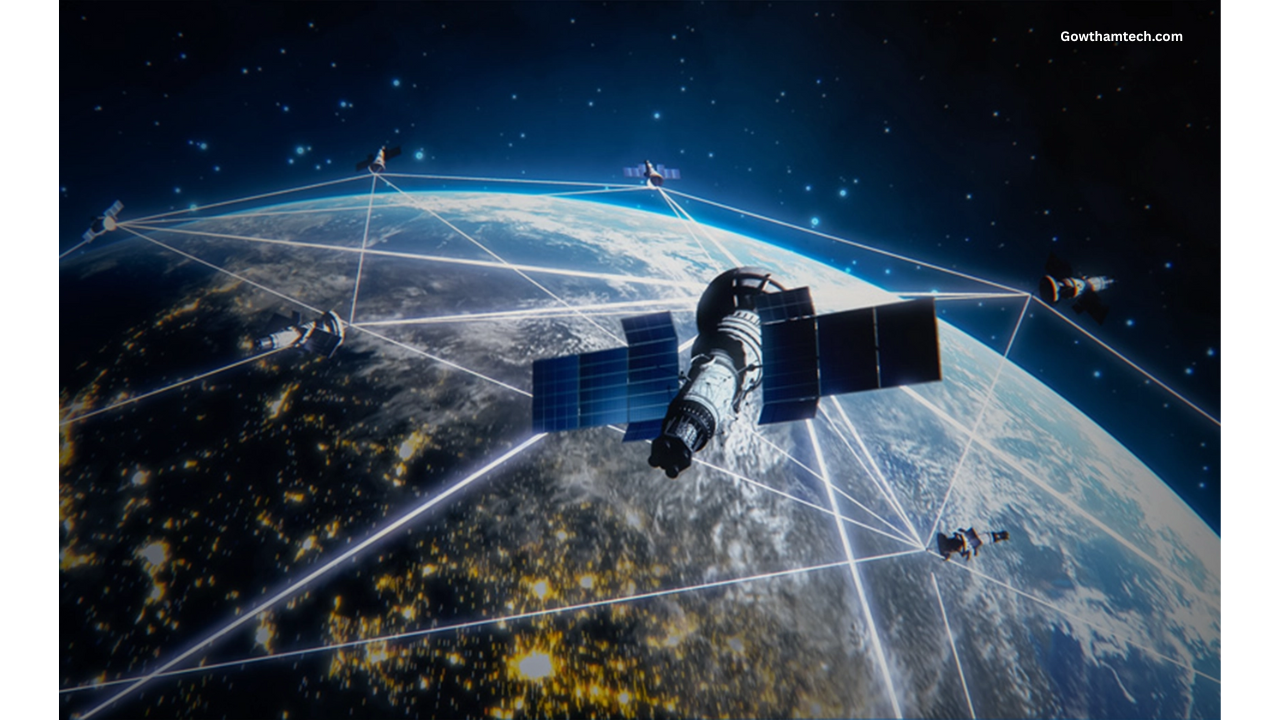
- The satellite In Orbit: The ground station beams the signal to the satellite orbiting Earth. The satellite functions like a high tech mirror the sky. It takes in the signal then amplifies it and redirects it back to where youre located around the globe. The kind of orbit it is in is the primary element that affects the efficiency of the Satellite Internet service.
- Geostationary Orbit (GEO): The traditional Satellite Internet providers such as Viasat and HughesNet utilize a couple of massive satellites that are placed in a geostationary orbit. It is about 35786 km (22236 miles) higher than the Earth. In this high altitude the orbital duration of a satellite coincides with Earths rotation which means it appears to be to be stationary in relation to the earth. This provides a broad coverage even with only a few satellites but it also introduces substantial delay (or delay) due to the vast distances that signals must traverse.
- The Low Earth Orbit (LEO) LEO: This is the latest technology of Satellite Internet pioneered by companies such as SpaceXs Starlink and soon to be launched Amazon Kuiper utilizes vast collection of small satellites orbiting low Earth usually between 500 2000 km high. The shorter distance significantly lowers latency which makes LEO Satellite Internet appropriate for games online as well as video conferencing and other applications that require real time.
- the User Terminal (Dish): The most important piece is the terminal for users at your place of residence made up consisting of satellite dishes (antenna) as well as the modem as well as a router. The dish also known as”dishy “dishy” receives the signal that comes from the orbiting satellite. The modem transforms the radio signal into a connection that your devices are able to comprehend while it creates the local Wi Fi network which allows you to connect devices like your smartphone computer as well as smart devices. The entire journey from your device to your ground station all the way to satellites and back down to the dish and back in only a couple of seconds.
The Evolution of Satellite Internet: A 2025 Perspective
The conversation around Satellite Internet has drastically changed over the past couple of years. Once a term used for compromise has become a symbol of new ideas. The marketplace of 2025 is far removed from the stagnant slow moving market that we had in the previous.
From Last Resort to Leading Edge
In the past the GEO Satellite Internet was the only choice for people who were not able to access cable or fiber. Although it was a vital access point for simple browsing as well as email its shortcomings were glaring. Video calls with high latency were an unsteady mess and online gaming was impossible. Data caps were very restrictive and the speeds though higher than dial up were unable to be competitive with terrestrial options.
The key to the game changer was the successful launch of LEO satellite constellations. SpaceXs Starlink was the first satellite to launch a commercial service on a large scale showing the possibility that the Satellite Internet service could provide high speed low latency connectivity that is comparable to broadband on the ground. This innovation ushered in the start of a new space race not just for the moon instead to control the orbital highways for data on Earth.
The LEO Revolution in Full Swing
by 2025 by 2025 by 2025 the LEO revolution will be in full impact. Starlink has widened its network to more than 6000 active satellites offering coverage to many countries and is introducing innovative hardware solutions that are suitable for mobile residential as well as maritime applications. Their successes have demonstrated that the effectiveness of the LEO method and compelled all the industry players to speed up.
Amazons Project Kuiper is rapidly deploying its own network and promises that it will bring competition to this LEO space. Although it is still in the initial stages of launching publically by 2025 the presence of its satellites has already had an impact on pricing as well as service model. Others such as Eutelsat OneWeb are also growing their LEO networks. Their focus is primarily on the government business as well as aviation market but making a contribution to general technological advances.
It has forced the traditional GEO companies to come up with new ideas. Viasats ViaSat 3 satellite constellation is an enormous increase in GEO satellite capability and is that is designed to provide greater speeds and better plans of data in order to compete the growing LEO options. Its evolution will ensure that users can choose from a wider selection of options in your Satellite Internet needs as never previously.
Pros and Cons of Satellite Internet in 2025
Selecting an internet service needs an accurate evaluation of its strengths as well as weak points. The year 2025 is the time to consider satellite internet. Satellite Internet presents an appealing but somewhat imperfect offer.
The Advantages (Pros)
- Unbeatable availability: This remains the most significant benefit for users of Satellite Internet. It is able to be used virtually everywhere on earth that has a clear vision from the heavens. From the remote mountain cabin to a vessel that is in the middle of an ocean Satellite Internet offers a fast connection when there is no alternative. This is the ideal solution for the rural and underserved communities.
- dramatically improved performance: The era of inaccessible latency is gone due to LEO satellites. With latency rates typically below 50ms the latest LEO Satellite Internet services are able to handle high demand applications such as Zoom calls online gaming as well as live streaming with ease. Speeds for downloading are extremely competitive often at or above 200 Mbps. That will be more than sufficient for the typical needs of households.
- Intensifying competition and innovation: The race between Starlink Kuiper and traditional providers is a boon for the consumer. The competition has lowered the cost of hardware bringing the monthly cost of subscriptions down which is leading to the removal restrictions on data usage for several residential plans. Technology is continually evolving with more advanced satellites that offer greater capacity as well as higher speeds.
- Rapid deployment: In contrast to cable or fiber that can require many years of expensive and disruptive development to connect a new region and then be re routed the Satellite Internet service is available as soon after the client is able to install their equipment. This is an excellent option for a quick connectivity requirement.
The Disadvantages (Cons)
- More expensive: Despite increasing competition Satellite Internet is generally more costly than terrestrial alternatives. The initial hardware costs for the modem and dish could range from a few hundred to several thousand dollars. The monthly costs for subscriptions tend to be more expensive than similar plan for fiber or cable.
- The potential for obstructions Clear unhindered views of the sky are essential for reliable connectivity. The presence of buildings trees and even dense foliage could hinder the transmission from the dish to satellite which can cause temporary or total service interruptions. LEO systems which monitor satellites as they move through space become extremely susceptible to obstructions that are even tiny.
- The Weather Interference (“Rain Fade”): While the technology is improving Satellite Internet signals are still damaged by extreme weather. The force of severe snow rain or even dense clouds can temporary disrupt the Internet service. This phenomenon is called “rain fade. “
- Data Caps Network Management Although unlimited data is getting more popular for standard residential plans premium plans and mobile ones typically have priority allocations of data. When this data is used up the speed could be reduced and “deprioritized” during times of the network being overwhelmed. This is an important aspect that power users should think about when deciding on the right Satellite Internet
Choosing the Best Satellite Internet Provider in 2025
This Satellite Internet market of 2025 is led by a handful of important players each of which has distinctive technological approaches as well as a target customer. This is a list of the most popular service providers.
Starlink (SpaceX)
Starlink is the first pioneer in huge scale LEO Satellite Internet Starlink remains the provider that will be the one to beat in 2025. The massive satellite constellation offers an extensive coverage as well as an established track record.
- Technology: Low Earth Orbit (LEO)
- Typical Speeds: 50 250 Mbps download 10 20 Mbps upload.
- latency 25 60 ms. It is the primary difference that makes Starlink perfect for applications in real time.
- Price: Hardware costs for the basic residential plan range from $599 to around $600 and monthly service charges start at about $120 on the residential standard plan. Mobile and high performance plans have much higher fees.
- Data Policy Basic residential packages provide unlimited data but are they are subject to fair usage policies for managing network congestion. Priority and mobile plans include specific amounts of data with high speed.
- Best Use Cases: Starlink is the most popular choice for rural home owners and Digital wanderers (with the “Roam” plans) and maritime customers who need speedy low latency internet service and who are willing to spend a bit more money for the speed. Its the ideal Satellite Internet option to play games and video conferencing.
Amazons Project Kuiper
The most awaited new entry that Amazons Project Kuiper has begun with the rollout to public in 2025. It is expected to become a powerful competitor to Starlink. Supported by Amazons vast logistical and customer service network It aims to provide an cost effective and solid Satellite Internet service.
- Technology: Low Earth Orbit (LEO)
- Average Speeds (Projected): Amazon offers a wide range of plans. One is an affordable consumer plan that promises the possibility of 400 Mbps speeds for download.
- latency (Projected): Expected to be similar to Starlink with a 30 60ms timeframe.
- cost (Projected): Kuiper is focusing on the affordability. Estimates indicate that their base hardware kit will cost less than $400. They will also offer the ability to offer competitive pricing monthly to capture a significant market portion.
- Data Policy The details are not yet clear However an unlimited data model that can be used for regular home usage is planned according to the market trend.
- Best Use Case Project Kuiper will be an excellent choice for rural consumers who require LEO speed but arent able to afford Starlinks price. The integration of Amazons ecosystem may also provide advantages that are unique.
Viasat
Viasat is a veteran in the Satellite Internet industry and operates a mighty collection consisting of GEO satellites. Through its ViaSat 3 constellation ViaSat has significantly increased its capacity for network connectivity to be competitive.
- Technology: Geostationary Orbit (GEO)
- Average speeds: Plans vary widely depending on location but currently offer the possibility of 150 Mbps download in select regions.
- Latency: 600ms+. This is the biggest drawback for GEO technology. Although it is fine to stream and download however it renders real time apps such as competitive gaming or responsive video calls a challenge.
- Price: Viasat often has less upfront cost and often offering expert installation as well as leased equipment. Monthly plans are priced competitively typically with promotional offers.
- Data Policy Viasat plans include ample data allowances at high speeds. Once you have exceeded the allowance speed is significantly decreased throughout the month.
- The ideal use case: Viasat is an ideal alternative for remote areas that rely on the internet to stream video as well as browsing and downloading files and are less susceptible to the effects of the effects of latency. It is a more economical Satellite Internet option in the event that LEO services arent accessible or too costly.
HughesNet
HughesNet is another GEO Satellite Internet provider that is well known for its wide coverage throughout the Americas. HughesNet has recently unveiled its latest Jupiter 3 satellite significantly improving its network speed and capacity.
- Technology: Geostationary Orbit (GEO)
- Average speed: All plans now include up to 100Mbps download speeds.
- latency more than 600ms like Viasat.
- Price: HughesNet has a similar pricing structure as Viasat that often include the option of leasing equipment as well as professional installation for lowering the initial price barrier.
- Data policy HughesNets plan is determined by prioritization of data. As with Viasat when the months priority data has been exhausted speed are reduced.
- The ideal use case: HughesNet is in the same audience in the same way as Viasat. It is an excellent choice for users in remote areas with high latency internet requirements. The comparison of plans offered by Viasat and HughesNet depending on your area is essential since the availability and prices can be different. The traditional type of Satellite Internet remains vital for a large number of.
Setting Up Your Satellite Internet System
One of the most attractive characteristics of current Satellite Internet specifically LEO systems such as Starlink are the specific focus on a user friendly and DIY installation.
- Site Survey Before you take your order you must to determine the best location for your food. Each provider offers the smartphone application with the ability to use augmented reality. Your phones camera will use to search the sky for the location youre planning to install. The application will detect any obstructions that could be there trees and chimneys or rooflines. It will also determine if the location can be used. In the case of LEO Satellite Internet the process is crucial because the dish requires the largest field of view in order to observe satellites movements as they travel through the sky.
Second Step: Opening and assembling The equipment kit usually comprises the dish a mount base a modem/router as well as the cabling. Installation is generally simple and usually involves simply pressing the dish onto its base. Systems are created for ease of use.
- Placement and Montage The dish should be placed in the approved location indicated by your site survey. In the case of RV or temporary use the base that comes with it can be adequate. In the case of a permanent installation in your home then youll likely have to buy a pole mount roof mount or fascia bracket which will elevate the dish so that it has a open view and to protect it from the elements.
Step 4 Connectivity and Power One cable usually is connected from the dish into your home and then connects to the router/modem unit. The cable supplies power for the dish as well as it transmits data signals. When it is connected and plugged into an outlet that is powered the system begins its automatic setup.
Phase 5: Initialization and Setup of Wi Fi This dish is going to begin to power up then orient itself in search of satellites. The “booting” process can take up to 15 30 minutes. After it is connected to the network your router or modem will start broadcasting on a Wi Fi connection. Then you can connect to the network using the providers application to set your own Wi Fi username and password. It is easy to set up the network for Satellite Internet is one of the major benefits offered by new solutions.
Satellite Internet for Specific Use Cases
The flexibility of Satellite Internet in 2025 will allow it to meet many different needs outside of the typical rural home.
- Mobile and RVs: For the ever growing group of digital nomads RVers and van lifers the mobile Satellite Internet is an exciting technology. The Starlink “Roam” plan allow users to stop and restart the service and access their devices wherever they are within their continental. It allows you to travel on travel without losing your ability to learn work and be entertained online.

- Aviation and maritime: High speed low latency Satellite Internet is changing connectivity on the sea as well as within the air. Yachts for luxury and commercial vessels as well as commercial airline companies are embracing these networks to ensure reliable broadband connectivity for passenger operations crew WiFi as well as vital safety related communications.
- Enterprises and Business: For businesses operating in areas that are remote such as mining agriculture construction and mining a secure Satellite Internet connection is crucial for the logistics communications as well as data transfer. In addition organizations located in cities are employing it to provide a back up (failover) connection in order to guarantee the continuity of their operations in case their main cable or fiber connection is interrupted.
- Emergency Response Following natural disasters that damage infrastructure on the ground Satellite Internet terminals are able to be quickly deployed to supply critical communications links for emergency officials rescue organizations as well as communities affected by the disaster.
Overcoming the Challenges of Satellite Internet
Though vastly enhanced living using Satellite Internet sometimes will require some adjustments to ensure the highest quality experience.
- Management of Data If you have prioritization of data Be aware of how much data you use. Make use of the apps offered by your provider to keep track of your usage. Set up large downloads for example game updates for off peak time if it is possible. The reduction in video streaming quality by a factor of 1080p to 4K can reduce the amount of data but without major reduction in quality of viewing.
- The impact of reducing latency: If youre connected to an Geo Satellite Internet service there is no way to change the latency that is high. You can however adjust. When browsing on the web websites could take a while for them to load when they finally do then the speed of download will be quick. When it comes to communication make sure you prioritize messaging and emails over live video calls. For LEO users there is a low rate of latency however ensuring that your dish has an unobstructed vision from the sky can be the most effective option to stop drops in lag or spikes.
- Handling Weather: Make sure your dish is properly mounted in order to limit movement during high wind conditions. In the winter months some dishes are equipped with a heating system that melts snow. You should make sure that this feature is turned on. Theres not much to be done about the torrential rainstorm that causes it to diminish outages of this kind are generally short lived and end when the storms cell recedes. The quality for Satellite Internet during storms has significantly improved.
The Future of Satellite Internet
The future for Satellite Internet is extremely promising. This technology isnt advanced but the next couple of years will bring even greater technological advancements.
- More Competition and Affordable: With Project Kuiper as well as other potential companies launching into this LEO market costs for both the hardware as well as monthly services are likely to remain at a low. This will help make the high performance Satellite Internet accessible to a larger audience.
- Direct to Device Connection: The next frontier is the ability to connect standard smartphones directly with satellites. Businesses such as Starlink as well as AST SpaceMobile are developing this technology which will eliminate all mobile dead zones and provide basic text voice and possibly data services everywhere on Earth without the need for special equipment.
- Next Generation Satellites new satellite generation is always being created and launched. These satellites will be equipped with higher powered processors more advanced antennas and laser inter links which allow satellites to transfer data among themselves within orbit decreasing the dependence of ground stations and decreasing the latency. Future of Satellite Internet is much faster and flexible.
- Eliminating the Global Digital Divide: In the end the most exciting promise that lies in Satellite Internet is the potential it holds to provide significant powerful connectivity to the 2.7 billion individuals who arent connected to the internet. When the technology becomes accessible and affordable that it opens up unprecedented possibilities for health education commerce as well as communication even within the smallest corners of the world. Its more than simply fast internet. Its an instrument for advancing global development. The positive impact of a worldwide accessible Satellite Internet service is not to be underestimated.
A New Era of Connectivity
In 2025 Satellite Internet has been able to completely erase its previous image as a laggard slow service for last resort. Its now an exciting ingenuous highly competitive sector which offers a crucial source for millions of users.
The introduction of LEO mega constellations is revolutionizing efficiency making ultra fast low latency internet an option for homes in rural areas or mobile employees as well as worldwide industries.
The best choice for choosing a Satellite Internet provider today involves weighing cutting edge capabilities and the higher price of LEO devices against the growing efficiency and access to modern GEO services.
Its no longer solely about obtaining every connection but rather choosing the most suitable connectivity for your individual demands and your budget. Technology continues to improve and competition increases and the next decade promises an increasingly connected and interconnected world and with Satellite Internet leading the way in breaking through one of the most elusive frontiers of digital separation.




Rayyan
Phone call