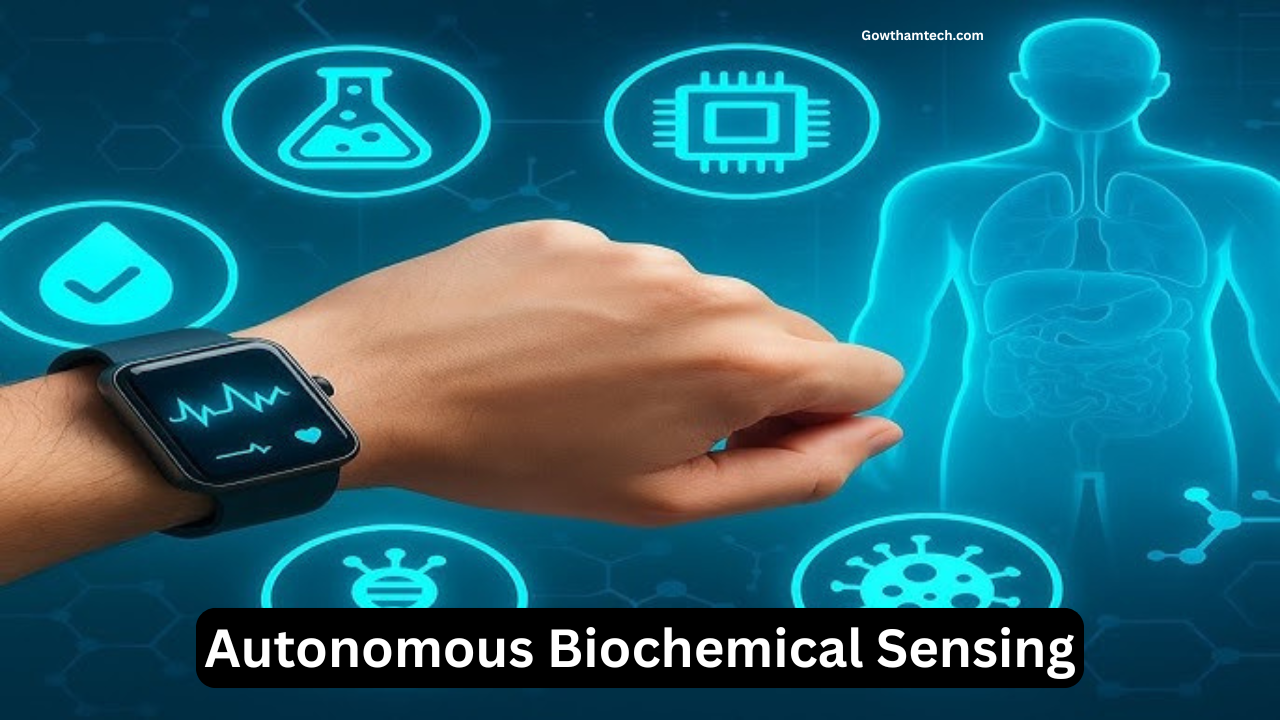
For centuries our understanding of the chemical international from the complicated methods within our bodies to the fitness of our planet has been based totally on snapshots in time. We collect a pattern take it to a lab and get a result hours days or even weeks later.
This manual reactive technique has served us well however its far fundamentally restricted. It cannot capture the dynamic ever converting nature of organic structures. What if we should pass beyond snapshots to a continuous live streaming movie?
What if we should deploy wise systems that couldnt handiest sense the biochemical international around them but also understand it analyze from it and act on it all without human intervention? This is the progressive promise of Autonomous Biochemical Sensing.
In 2025 Autonomous Biochemical Sensing has emerged from the confines of specialised research labs to become one of the maximum exciting and impactful technological frontiers. It represents the effective convergence of advanced biosensors synthetic intelligence and robotics developing a brand new class of clever structures able to independently monitoring reading and responding to their biochemical environment.
This guide will function your roadmap to this transformative discipline. We will explore the fundamental additives that make those systems viable survey the actual world packages which can be already changing lives and look ahead to a destiny
where Autonomous Biochemical Sensing creates a virtually sentient responsive world. From wearables that predict contamination before symptoms appear to drones that patrol our rivers for pollution this technology is set to redefine our dating with the chemical data that governs our life.
What is Autonomous Biochemical Sensing? The Core Components
Autonomous Biochemical Sensing isnt a single generation but an incorporated device a synergistic fusion of hardware and software that permits a machine to carry out the entire workflow of a chemical analyst. To achieve this a system ought to be capable of sense assume and act. These three pillars form the muse of any Autonomous Biochemical Sensing platform.

1. The Sensor: The Nose and Tongue of the System (SENSE)
The coronary heart of the system is the biosensor a tool that converts a organic or chemical interaction right into a measurable sign. This is wherein the bodily global meets the digital. The choice of sensor is crucial and relies upon totally on the target analyte (the substance being measured). In 2025 a giant and complicated toolkit of biosensors is available:
- Electrochemical Sensors: These are the workhorses of the sector. They degree modifications in electric properties (like present day or voltage) that occur while a target analyte interacts with a biological popularity element (like an enzyme or an antibody) immobilized on an electrode. A prime example is the continuous glucose reveal (CGM) used by diabetics.
- Optical Sensors: These gadgets hit upon changes in light properties together with fluorescence absorbance or floor plasmon resonance while an analyte is gift. They are pretty sensitive and are often used for detecting proteins DNA and pathogens.
- Mass Based Sensors (e.G. Quartz Crystal Microbalance): These sensors are notably sensitive to changes in mass. When the goal molecule binds to the sensors floor the tiny growth in mass adjustments the sensors resonant frequency presenting a clean sign.
- E Noses and E Tongues: These are not unmarried sensors but arrays of various semi selective sensors. By themselves every sensor isnt very particular however via the usage of synthetic intelligence to research the combined pattern of responses throughout the entire array the system can become aware of and quantify complex combos of odors or tastes. The energy of Autonomous Biochemical Sensing starts with those superior sensing abilties.
2. The Brain: AI and Machine Learning (THINK)
A uncooked sensor signal is just noise. The “think” factor is what turns this information into actionable perception. This is the domain of artificial intelligence (AI) and machine learning (ML) algorithms regularly going for walks on effective miniaturized processors immediately on the device (a idea referred to as facet computing). The AI brain plays numerous essential responsibilities:
- Signal Processing: It filters out noise from the uncooked sensor records corrects for environmental elements like temperature and calibrates the sensors response.
- Pattern Recognition: In complicated samples the AI must pick out the specific “fingerprint” of the goal analyte from a sea of interfering materials. This is where ML shines as it could be trained on hundreds of examples to apprehend subtle patterns that a human analyst would miss.
- Decision Making: This is what makes the machine clearly self sufficient. Based on the processed records the AI makes a selection. This will be as simple as “Analyte concentration is above the edge; send an alert” or as complex as “Soil nitrogen tiers are losing; spark off the irrigation machine to install liquid fertilizer.” The intelligence layer is what elevates a easy sensor into an Autonomous Biochemical Sensing
3. The Body: Automation and Robotics (ACT)
The “act” issue gives the gadget the physical potential to perform within the real world with out human supervision. This can variety from easy mechanisms to complex cell robots.
- Microfluidics: Often called “lab on a chip” these structures use tiny channels and pumps to robotically take care of liquid samples including reagents mixing and supplying the sample to the sensor. This automates the whole laboratory workflow on a microscale.
- Wearable Platforms: For health monitoring the “body” is a patch watch or implant that holds the sensor against the pores and skin or within the body ensuring continuous touch with the organic fluid being monitored (e.G. interstitial fluid for glucose).
- Mobile Robotics: For environmental tracking the Autonomous Biochemical Sensing machine might be housed in a drone that can fly to one of a kind points alongside a river an self sustaining underwater automobile (AUV) which could map pollution plumes within the ocean or a wheeled rover that could examine soil composition across a large farm.
The seamless integration of those three components sensing thinking and acting is the defining feature of Autonomous Biochemical Sensing.
Autonomous Biochemical Sensing in 2025: A Technological Tipping Point
The idea of Autonomous Biochemical Sensing has been a purpose for many years but 2025 marks the 12 months it honestly comes of age. Several converging technological trends have made this viable transferring the sphere from bespoke laboratory prototypes to scalable commercially possible products.
The Miniaturization Revolution
Advances in microfabrication and MEMS (Micro Electro Mechanical Systems) have allowed us to decrease complicated laboratory contraptions onto tiny chips. Sensors that after stuffed a workbench can now match on a fingertip. This miniaturization is important for growing wearable devices portable analyzers and systems that can be deployed discreetly in the environment.
The Rise of Edge AI
In the beyond sensor facts needed to be sent to the cloud for heavy obligation AI analysis. This added latency ate up energy and created privateness worries. The development of powerful low power AI accelerator chips method that sophisticated machine studying models can now run immediately at the sensing device itself. This “facet computing” lets in for real time selection making and is a key enabler for any genuine Autonomous Biochemical Sensing gadget.
Advances in Sensor Longevity and Anti Fouling
A essential ancient project has been “biofouling” the tendency for biological molecules and microbes to paste to a sensors surface through the years degrading its overall performance. In 2025 new nanomaterials polymer coatings and self cleaning mechanisms have dramatically prolonged the operational life of in situ sensors. This has made lengthy term unattended deployments a core requirement for Autonomous Biochemical Sensing a realistic reality.
The First Integrated Commercial Platforms
While character additives had been available for years 2025 is seeing the release of the first completely included Autonomous Biochemical Sensing structures. These are stop to stop answers offered by means of agencies that integrate the sensor the analytics software program and the automated hardware into a unmarried cohesive machine for specific programs including industrial bioprocessing or water best management. This marks the maturation of the market from additives to solutions.
The Power of Unattended Operation: Key Advantages of Autonomous Biochemical Sensing
The shift from guide lab based totally evaluation to Autonomous Biochemical Sensing offers a cascade of powerful blessings which can be set to disrupt a couple of industries.

1. Real Time Continuous Monitoring
This is the maximum profound gain. Instead of a single facts point from a lab test those systems offer a non stop circulate of information 24/7. For a diabetic this indicates seeing their glucose trends in actual time now not only a picture from a finger prick. For an environmental enterprise it approach detecting a pollution event the instant it happens no longer days later whilst fish start dying. This high decision temporal information unlocks the potential to peer and understand dynamic processes as they unfold.
2. Enhanced Accuracy and Reproducibility
Manual laboratory paintings is susceptible to human errors from pipetting errors to variations in pattern dealing with. By automating the complete analytical workflow Autonomous Biochemical Sensing systems cast off this variability. They perform each step with robot precision main to a long way greater correct reliable and reproducible information.
3. Improved Safety and Access to Extreme Environments
These structures can pass wherein people can not or ought to now not. An Autonomous Biochemical Sensing robotic can monitor the air for toxic gases inside a chemical plant after a leak an AUV can dive deep into the sea to take a look at hydrothermal vents and a drone can fly into the plume of a volcano. This era permits us to accumulate crucial biochemical information from risky or inaccessible environments without risking human life.
4. Proactive Predictive Insights
With a continuous circulate of remarkable information system studying algorithms can move past easy indicators to predictive analytics. A wearable Autonomous Biochemical Sensing device should learn a users specific physiological baseline and hit upon the subtle biochemical shifts that precede an contamination caution them a day or two earlier than they even experience sick. An agricultural system should predict a crops nutrient deficiency earlier than it turns into seen to the naked eye. This shifts the paradigm from reactive to proactive intervention.
5. Cost Effectiveness and Democratization
While the preliminary funding in an Autonomous Biochemical Sensing platform may be excessive the long time period operational prices are often a good deal lower than conventional techniques. It eliminates the want for skilled technicians high priced lab reagents and the logistics of pattern transportation. This fee discount is democratizing get right of entry to to tremendous biochemical evaluation making it to be had now not simply to large organizations and research labs but additionally to smaller farms nearby municipalities and even individuals.
Applications in Action: Where Autonomous Biochemical Sensing is Making an Impact
The programs for Autonomous Biochemical Sensing are as significant because the chemical global itself. Here are some of the key areas in which its miles already being deployed in 2025.
[Image collage of autonomous sensing: a wearable health monitor a water monitoring drone and a smart farm]
Personalized Healthcare and Wearables
The consumer fitness area is at the leading edge of this revolution.
- Closed Loop Diabetes Management: Continuous glucose video display units (CGMs) are a mature shape of Autonomous Biochemical Sensing. They constantly degree glucose in the interstitial fluid. When connected to an insulin pump they shape a “closed loop” device or “artificial pancreas” that automatically adjusts insulin shipping in real time a existence changing technology.
- Beyond Glucose: In 2025 the primary multi analyte wearables are emerging. These devices often in the form of a skin patch can concurrently display lactate (for athletic overall performance and fatigue) cortisol (for pressure) and key electrolytes supplying a holistic real time picture of a persons metabolic state.
Environmental Monitoring
Protecting our planet calls for actual time statistics on its fitness.
- Smart Water Grids: Autonomous Biochemical Sensing stations are being deployed in rivers lakes and coastal areas. These solar powered buoys can continuously display for pollutants like heavy metals insecticides and nitrates in addition to organic threats like harmful algal blooms. When a pollutant is detected the device can automatically cause alerts or even manage water drift at downstream treatment plant life.
- Air Quality Drones: Drones equipped with “e nose” arrays are being used to create high decision 3D maps of air pollutants in cities figuring out hotspots and tracking the dispersion of industrial emissions with a level of detail previously unattainable.
Smart Agriculture and Food Production
Autonomous Biochemical Sensing is a cornerstone of Precision Agriculture the motion to make farming extra efficient and sustainable.
- Soil Health Rovers: Small independent rovers can patrol large fields periodically placing probes into the floor to measure key parameters like nitrogen phosphorus potassium (NPK) ranges pH and moisture. This information is used to create particular maps that manual variable fee fertilizer application reducing waste and environmental runoff.
- Early Crop Disease Detection: Stationary sensors or drones can “odor” the risky organic compounds (VOCs) that flowers release when they may be burdened through sickness or pests making an allowance for focused intervention lengthy before the trouble is visible.
Industrial Bioprocessing and Pharmaceuticals
In the production of the whole lot from beer to life saving biologic pills consistency is fundamental.
- Smart Bioreactors: Traditionally tracking a fermentation or cellular way of life system worried taking manual samples. Now in line Autonomous Biochemical Sensing probes may be located at once inside the bioreactor to continuously screen essential parameters like glucose lactate pH and dissolved oxygen. This actual time feedback allows the machine to routinely modify nutrient feeds and different conditions to optimize the yield and excellent of the very last product.
Challenges on the Path to Ubiquity for Autonomous Biochemical Sensing
Despite its giant capacity several hurdles should be triumph over for Autonomous Biochemical Sensing to end up truely ubiquitous.
- Sensor Drift and Calibration: All sensors over the years suffer from “go with the flow” wherein their signal adjustments even if the analyte attention is strong. For lengthy term autonomous deployments growing self calibrating sensors or faraway calibration techniques is a important task. The machine must be able to believe its personal measurements for months or years with out human intervention.
- Power Management: Continuous operation calls for a continuous energy source. For desk bound structures this might be sun power but for cellular robots or small wearables battery existence is a primary constraint. Developing ultra low power sensors and electronics is critical for extending the operational lifetime of these devices.
- Data Security and Privacy: An Autonomous Biochemical Sensing tool that monitors your fitness is amassing some of the maximum non public records conceivable. Ensuring this facts is encrypted secure and guarded from unauthorized access is a paramount social and technical venture. Similarly data from environmental or commercial sensors will be touchy and a goal for company or national espionage.
- System Integration and Interoperability: An effective gadget calls for seamless integration between the sensor hardware the AI software and the robotic platform. In 2025 many of those components are nevertheless advanced by special corporations and a lack of standardized communique protocols could make building a robust dependable system a complex engineering feat.
The Architecture of an Autonomous Biochemical Sensing System
Understanding the float of facts is key to appreciating how these structures work. The architecture follows a clear cyclical pipeline:
- Sampling and Detection: The robotic or computerized thing acquires a pattern (e.G. draws in a small quantity of water comes into contact with the pores and skin). The target analyte interacts with the biosensors popularity element.
- Signal Transduction: The biosensor converts the biochemical interplay right into a uncooked electric or optical sign.
- On Board Processing (Edge AI): The uncooked signal is amplified filtered and digitized. The on board processor runs AI/ML algorithms to research the sign pick out the analyte quantify its concentration and accurate for environmental variables.
- Decision and Action: Based at the analysis the systems AI makes a selection. It would possibly trigger a local motion (e.G. regulate a valve) store the statistics or initiate communique.
- Data Transmission: The processed information and decision logs are transmitted wirelessly (via LoRaWAN 5G or satellite tv for pc) to a valuable server or cloud platform for lengthy term storage further evaluation and visualization by way of a human operator.
- Feedback Loop: The machine can also obtain updated instructions or new models from the crucial server permitting it to adapt its behavior over time. This whole loop for a unmarried size can take place in seconds permitting true real time reaction. This complete cycle defines the power of Autonomous Biochemical Sensing.

Autonomous Biochemical Sensing vs. Traditional Methods
The paradigm shift brought about by means of Autonomous Biochemical Sensing is most glaring while in comparison to the traditional lab primarily based gold standards.
Feature Autonomous Biochemical Sensing Traditional Lab Analysis (e.G. GC MS HPLC ELISA)Location of Analysis In situ (at the factor of need)Ex situ (in a centralized laboratory)Time to Result Seconds to minutes Hours to weeks Data Frequency Continuous or high frequency Single data point according to pattern Labor Requirement Minimal (unattended operation)High (requires professional technicians)Sample Integrity High (no transportation or garage)At hazard of decay all through transport/storage Cost Per Sample Very low (after preliminary setup)High (includes exertions reagents tool time)Hardware Miniaturized portable often low cost Large highly priced desk bound instruments
Export to Sheets
While lab evaluation will constantly have its area for final precision and discovery Autonomous Biochemical Sensing is basically converting the panorama of tracking and method manage.
The Future is Autonomous: The Trajectory of Autonomous Biochemical Sensing
The discipline is evolving at an excellent charge. The subsequent decade will see the emergence of even more sophisticated and incorporated systems.
- Bio Hybrid Systems: The next frontier will contain using residing cells and organisms because the sensors themselves. Engineered micro organism may be designed to produce a fluorescent sign in the presence of a particular pollutant with the entire dwelling system encapsulated in a tool. This is the closing fusion of biology and engineering.
- Swarm Sensing: Instead of a unmarried highly state of the art sensor the destiny may additionally lie in deploying swarms of thousands of tiny easy and cheap autonomous sensors. A swarm of micro drones may want to map air pollution or a “smart dirt” can be scattered across a subject to report on soil situations. The collective intelligence of the swarm could provide a stage of spatial and temporal resolution this is impossible these days.
- Self Healing and Self Calibrating Sensors: Inspired by way of biology researchers are developing sensors with built in redundancy and self restore competencies. Future Autonomous Biochemical Sensing structures can be capable of hit upon when a sensor is failing automatically transfer to a backup and even use microfluidic structures to recalibrate themselves permitting multi yr deployments with none human protection.
A World That Senses Itself
Autonomous Biochemical Sensing is extra than simply an incremental improvement in analytical era; it is a disruptive soar forward that is basically converting how we interact with the chemical and organic global. By giving machines the capability to sense suppose and act on biochemical records were putting off the latency and limitations of human intervention and unlocking a new technology of actual time cognizance.
In 2025 were at the beginning of this modification. The era is enabling personalized proactive healthcare sustainable agriculture green industries and a cleanser more secure surroundings. It is creating a world that could sense its own kingdom of fitness be it the fitness of a single human cellular someone a farm a river or the whole planet and reply intelligently to preserve its properly being. The journey ahead can have its demanding situations but the destination is a global made more secure more healthy and greater green thru the pervasive intelligence of Autonomous Biochemical Sensing.