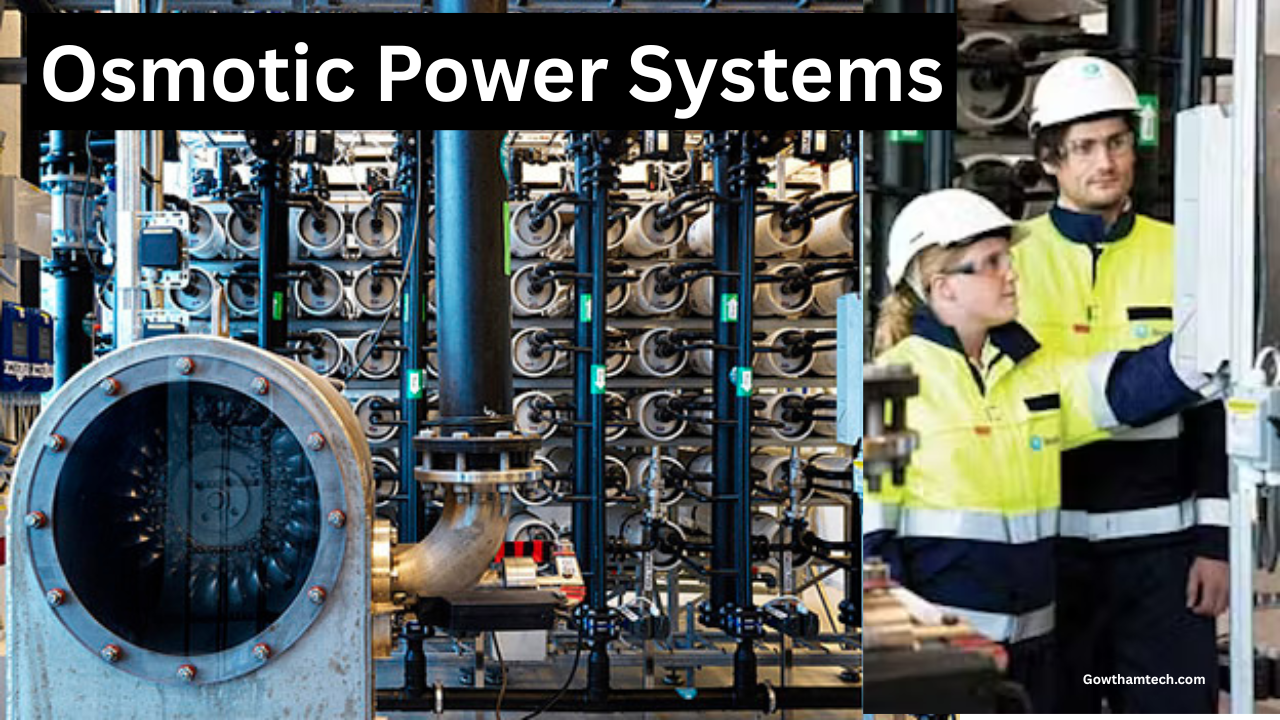
Imagine a source of power which is constant reliable and carbon free. produced by the mere combination of saltwater and freshwater. Its not a fantasy of the future but the actual fact of Osmotic Power Systems. In 2025 the world is grappling ..
with an ever growing global climate crisis as well as the pressing necessity for reliable sustainable energies this amazing technology sometimes referred to “blue energy” or “salinity gradient power” is moving out of the laboratory and stepping into the limelight. Its one of the hottest and yet unexplored areas of clean energy that is making use of a natural phenomenon which can be found in estuaries and rivers around the world.
Since the beginning of time humans have made use of the energy of sun wind and water moving. However an enormous and continuous resource of energy is inaccessible the difference in chemical properties between saltwater and freshwater. When rivers flow into the ocean an enormous quantity of energy is released when the two water bodies collide.
The potential for the world is astounding with estimations suggest that Osmotic Power Systems can generate as much as 2 Terawatts of power which is equivalent to the power output of 2000 massive nuclear power plants.
This definitive guide serves as the ultimate source for 2025. It will explore the technology science application and the potential development for Osmotic Power Systems and a technique that is poised to make a significant contribution to the global portfolio of green energy sources.
The path to the blue energy revolution has been a journey that has been a long term effort in science as well as engineering innovations. Although the concept has been recognized for decades however the issue has been figuring out how to make membranes and systems that are efficient and durable enough to be economically practical.
Today with important advances in nanotechnology as well as the science of materials Osmotic Power Systems are at an tipping point.
This book will go over two main methods of harnessing this power Pressure Retarded Osmosis (PRO) as well as Reverse Electrodialysis (RED) providing a clear complete overview of the way these revolutionary systems function and their implications to the future of renewable energy sources.
What are Osmotic Power Systems? The Science of Mixing Water
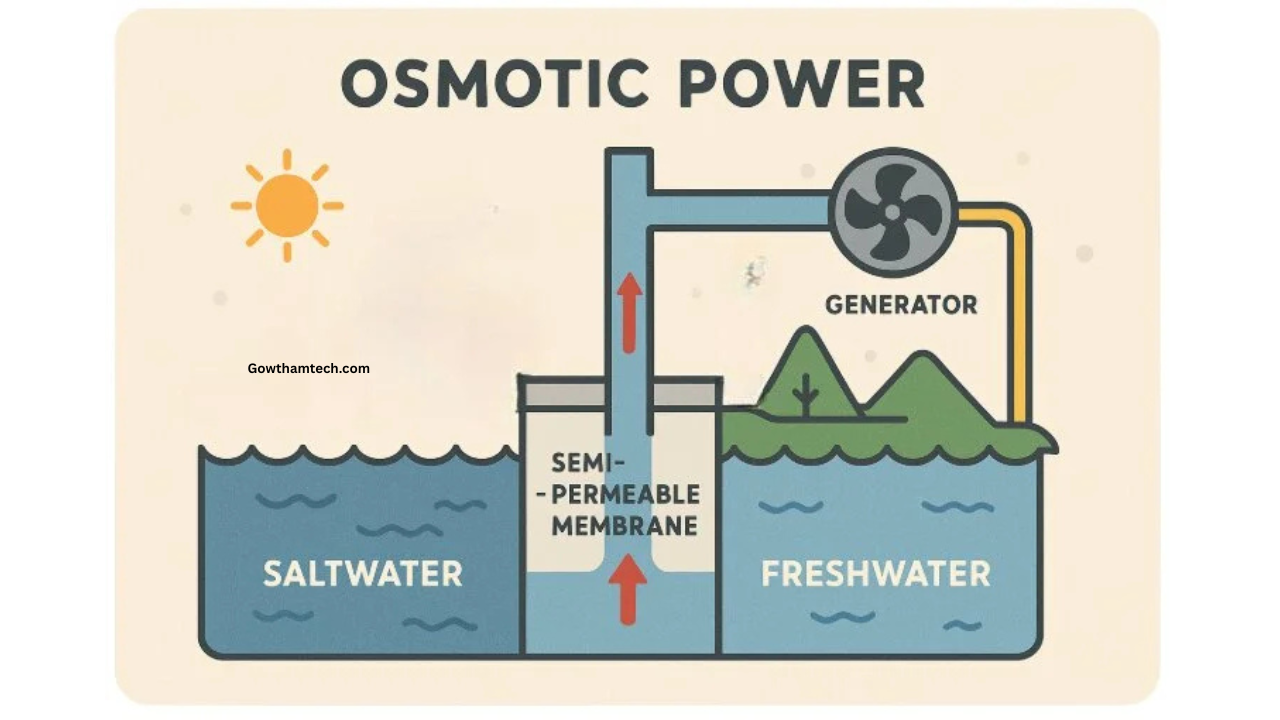
In its core the Osmotic Power System is a system that transforms the chemical energy that is released by mixing of two substances with diverse salt concentrations into electric energy. The primary principle behind the process is osmosis.
Understanding Osmosis
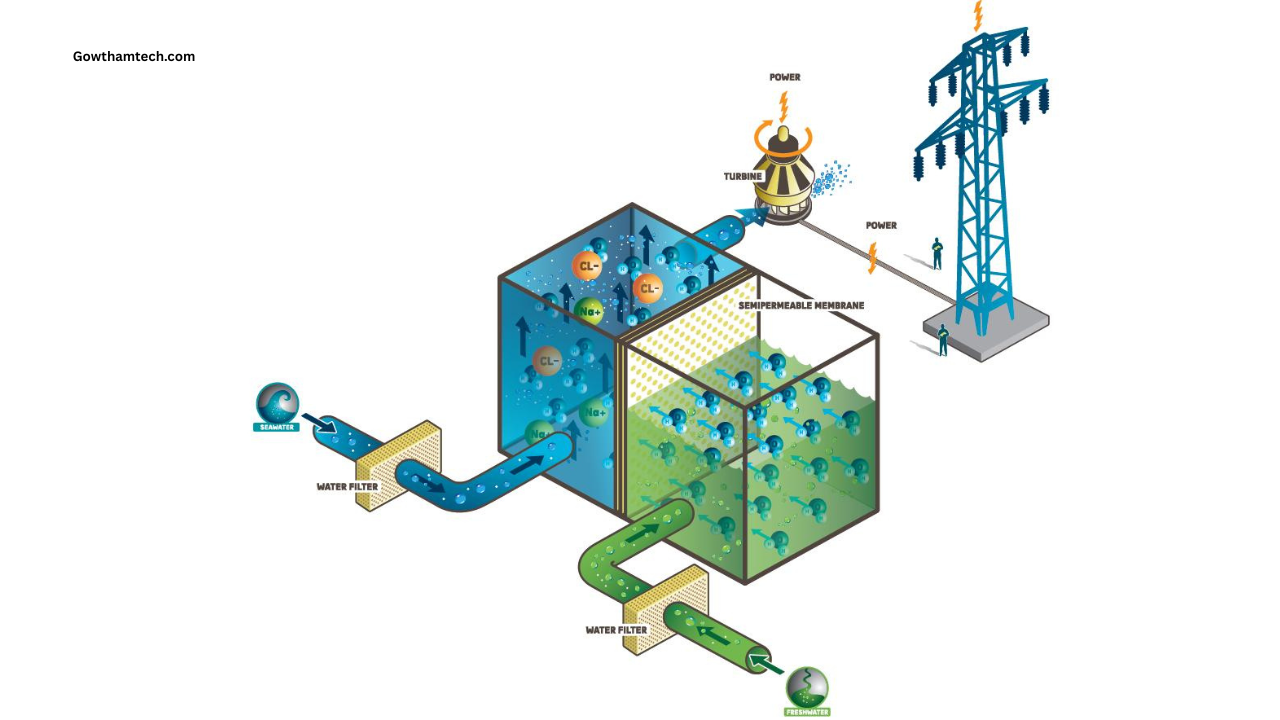
Osmosis is a natural process that occurs when liquid molecules (like water) effortlessly traverse a semipermeable membrane from an area of low amount of solute (like freshwater) to one with a high concentration of solutes (like saltwater). Semipermeable membrane creates a barrier that lets the solvent pass through but block the solute (the dissolving salts). Waters movements create an imbalance in pressure across the membrane. This is known as osmotic tension. The pressure difference between seawater and river water is enormous averaging 27 bar. This corresponds to the pressure in the bottom of a vertical 270 meter (885 foot) the water column. This incredible pressure is the one which Osmotic Power Systems is designed to harness and change into.
In essence these systems dont “create” energy in the conventional sense but they release the potential energy stored in the difference of salinity which is a naturally occurring battery replenished by Earths water cycle. In the event that saltwater and freshwater can be mixed within an estuary the energy disperses into a tiny quantity of heat. Osmotic Power Systems offer a safe and controlled space for the capture of this energy before it goes to waste.
Two dominant technologies are driving the pack in this area:
- Pressure Retarded Osmosis (PRO): This technique uses pressure from hydraulics to produce power.
- Reverse Electrodialysis (RED): This technique directly creates an electric current through Ion motion.
The understanding of the mechanisms behind these two forms of Osmotic Power Systems is crucial to comprehend their strengths and obstacles. Both of them have an identical goal: efficiently harnessing the salinity gradient. However they follow completely different routes for achieving this.
(PRO): Pressure Retarded Osmosis (PRO) is the power source of Pressure inducing Water
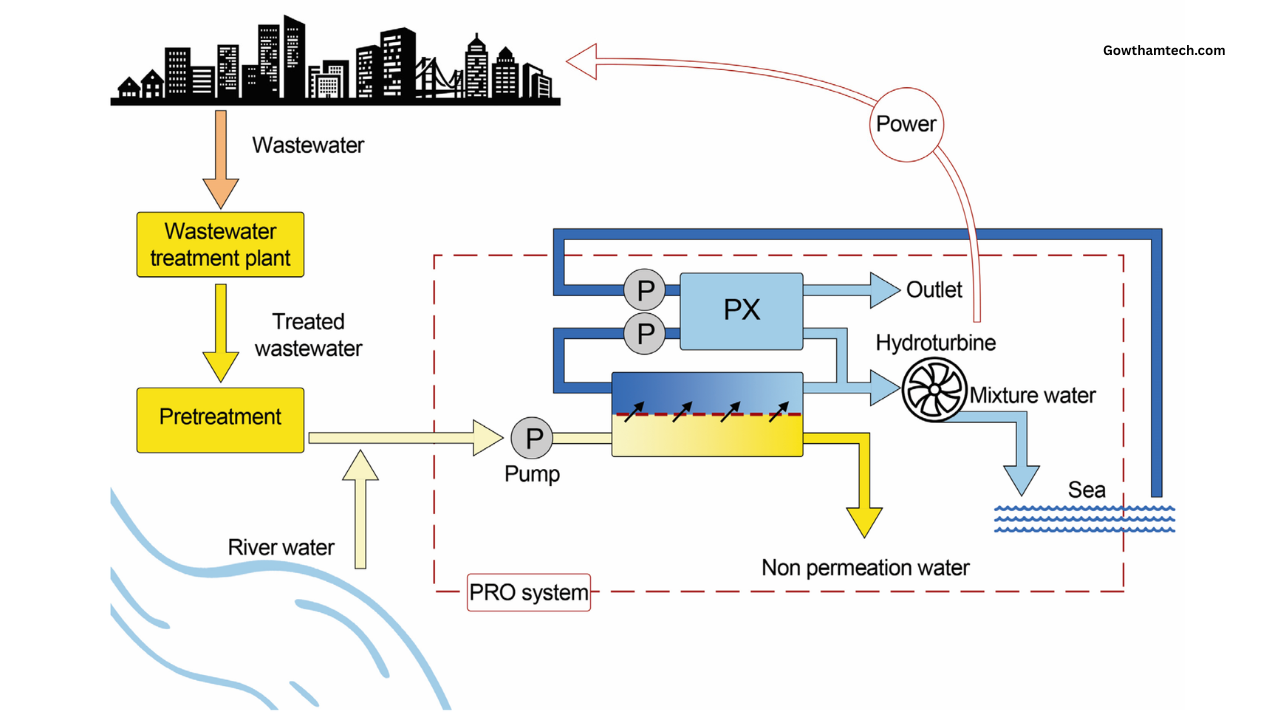
Pressure Retarded Osmosis (PRO) is today the most researched and tested kind of Osmotic Power System. The procedure is beautiful in its simplicity harnessing the natural flow of osmotic water to generate a power turbine.
How PRO Works: A Step by Step Breakdown
A PRO plant will typically be located where a river joins the ocean to guarantee the constant supply of saltwater and freshwater. The central component of the plant is the membrane unit comprising a number of hollow fiber and spiral wound semipermeable membranes.
- Pressurization Seawater is first purified before being pumped through the membrane module under very high pressure. The pressure however is maintained at a lower level than the tension of the osmotic fluid between seawater and freshwater (hence the term “Pressure Retarded”).
- Osmotic Flow On the opposite side of the membranes freshwater from the filter is released at less pressure. Based on the osmotic gradient molecules on the freshwater side naturally traverse the semipermeable membranes to the pressure controlled seawater side.
- The volume and pressure Rise: This influx of water expands the volume of the stream and keeps the pressure high of the now slightly diminished seawater stream. The stream is commonly described as “pressurized brackish water.”
- Energy Generation The high pressure large volume brackish water flows by a hydro turbine. While the water is flowing into the machine it rotates the blades. Then it generates a motor that generates electric power.
- Pressure Recovery Following the passage via the turbine substantial amount of the pressure that is in the stream of water can be utilized to in the pressurization of seawater that is incoming which is a vital step in increasing the efficiency in the Osmotic Power System. The rest of the brackish low pressure water then flows to the surrounding environment.
The main ingredient in a PRO is the membrane. It has to be permeable to water and almost totally impermeable to salt and also strong enough to endure the extreme pressures that are involved in. The latest advances in aquaporin and thin film composite membranes have dramatically improved the power density (the quantity of energy generated by the membrane) and is the most important factor in the viability economics of these Osmotic Power Systems. The durability and efficacy of membranes remains the main investigation of Pro based Osmotic Power Systems.
(RED): Reverse Electrodialysis (RED) is a method of generating electricity directly from ions
Although PRO utilizes hydraulic pressure while Reverse Electrodialysis (RED) follows the more direct route of using the chemical potential from the salinity gradient directly to electricity. It functions as a battery continually recharged with the movement of freshwater as well as saltwater.
How RED Works: The Ion Exchange Process
The core of an RED system is the “stack” consisting of a array of rotating Cation Exchange Membranes (CEMs) and Anion Exchange Membranes (AEMs).
- Cation Exchange Membranes (CEMs): These membranes are only permeable for positively charged ions (cations) like sodium (Na+).
- Anion Exchange Membranes (AEMs): These membranes can only be permeated by positively charged anion (anions) like the chloride (Cl ).
This is the procedure:
- Alternating Flows The space between these membranes are filled with fresh and saltwater making a variety of compartments.
- Ion Migration The salt present in seawater is predominantly sodium chloride (NaCl) that is dissolved in water and turns into positively sodium ions (Na+) as well as positive chlorine ions (Cl ). Because of the different concentrations the ions are naturally able to migrate from high concentration saltwater areas to lower concentration freshwater zones.
- Selective Passage Ion exchange membranes control this flow. The CEMs let only positive Na+ions move through whereas AEMs let only negative ClIons to go through. This causes both negative and positive Na+ ions to travel in opposing directions within the stack.
- creating a voltage: The arranged and distinct motion of charged ions causes an electrical potential change that is in other words voltage between every pair of membranes. If youre dealing with a massive pile of hundreds of pairs of membranes these tiny voltages can add up to the magnitude of a large overall voltage.
- Electricity Generation Electrodes are located in the middle of the stack. Electrochemical reactions occur between these electrodes. This lets the ionic current within the stack to convert to an electrical current made up of electrons. This current can be pumped through an external circuit providing power to homes and businesses.
The primary challenges faced by RED Osmotic Power Systems consist of reducing resistance to electrical currents of membranes and water compartments stopping membrane pollution from organic matter that is present in the water as well as reducing the total cost of Ion exchange membranes. The constant improvement in the polymer chemistry leads to more effective and cost effective membranes. This makes RED an extremely promising form of Osmotic Power System.
Unmistakable Advantages of Osmotic Power Systems
In terms of renewable energy sources Osmotic Power Systems have a unique and impressive set of benefits that set them apart from traditional renewables such as solar or wind.
Continuous and Predictable Power:
In contrast to solar power that is dependent on daylight or wind power which is dependent on the speed of wind or the speed of water flowing towards the ocean is steady and extremely stable. This makes it possible for Osmotic Power Systems to be operational all the time as a baseload power source ensuring a consistent and steady supply of electricity to grid. This stability is an enormous benefit to grid operators looking to counterbalance the intermittentity of other renewable energy sources.
High Energy Density and Small Footprint:
The overall area of a facility can be substantial due to the water pretreatment infrastructure the power generation elements of Osmotic Power Systems are relatively small. The power potential from the location of each is huge which means they have a better efficiency than many other technologies that are renewable. They are particularly suited in coastal regions in which land is scarce.
Massive Global Potential:
The global theoretical potential of the energy of the salinity gradient is huge. In capturing just a tiny fraction of the power available in water mouths across the globe Osmotic Power Systems could be able to make a major contribution to the global demand for electricity. It is a resource that is widely distributed and has potential locations all over the world.
Low Environmental Impact:
Osmotic Power Systems are an energy source that is clean without direct carbon dioxide emissions from the operation. One of the main environmental concerns is the flow of brackish waters back to the estuary. But as the mixing occurs naturally its effect can be considered minimal as long as the discharge is handled in a way that avoids the local stratification effect. Water intake and discharge methods are also required so as to reduce the impact on marine life like other power plants operating along the coast. Development of eco friendly Osmotic Power Systems is of paramount importance.
Synergistic Opportunities:
They can also be integrated together with other facilities in order to increase the overall effectiveness as well as sustainability. In the case of the Osmotic Power System could be combined with a desalination unit and use the brine with high salinity discharged from desalination as a saltwater feed. This would also increase the pressure gradient of the osmotic system and minimize the environmental impacts on the environment of brine. These systems can be integrated into wastewater treatment facilities making use of treated freshwater effluents as the source of low salinity.
These advantages drive the increased demand and investments for Osmotic Power Systems to be an essential technology to an energy efficient and sustainable future.
Hurdles to Overcome: Challenges Facing Osmotic Power Systems in 2025
Despite their enormous potential the wide scale commercialization in Osmotic Power Systems is not without challenges which engineers and scientists are striving to resolve by 2025.
Membrane Performance and Durability:
The membrane is the essential component for the PRO as well as RED systems. It can also be the root of many of the most difficult issues.
- Power Density Achieving a high density of power is vital to reduce the membrane size required and consequently the capital costs of the plant. The aim is to maximise power output with the least feasible footprint.
- Fouling Freshwater as well seawater have microorganisms organic matter as well as suspended solids which can cause clogging or coating on membranes surface which is called “fouling” or “biofouling. ” Fouling decreases membrane effectiveness and longevity and calls for expensive and extensive water pretreatment as well as periodic cleaning of the membrane. Making membranes resistant to fouling is an important subject of research.
- durability: Membranes have to be strong enough to stand up to extreme pressures (in the PRO) and continuously operate for a long time under a harsh saline environments without deteriorating.
Development of high tech cost effective high efficiency and anti fouling membranes is a key element for the development of Osmotic Power Systems.
Capital Costs and Economic Viability:
At present the cost of energy (LCOE) is levelized. of electricity (LCOE) for Osmotic Power Systems has been shown to be more expensive than traditional renewables such as solar and wind. Its high capital investment is mainly due to the huge membrane size that is required as well as the large water pre treatment system that is the main obstacle for commercialization. When membrane technology advances and the manufacturing process is scaled up and costs decrease they are likely to fall substantially. The governments incentives and carbon pricing plans will also contribute to making these projects economically appealing. Making the case economically viable for Osmotic Power Systems is crucial for their implementation.
Water Pre treatment:
The water that flows to the Osmotic Power Systems has to be thoroughly cleaned to shield the membranes from dirt and physical damages. The process of pretreatment is energy intensive and could significantly increase the operational and capital cost of the facility. The process of optimizing pre treatment to make it effective and cost effective is an important engineering issue.
Environmental and Ecological Considerations:
Although the impact on the environment is typically low it does not mean that it is completely at all. The huge volumes of water pumped through the plant and then released to the estuary requires cautious management. Environmental impact assessments should carefully take into account the potential impacts on the local salinity pattern along with water temperatures as well as aquatic ecosystems in particular the impact of impingement on and entrainment the fish as well as other species within these intakes. The selection of the right site and the design of plants are essential to the success of any Osmotic Power System project.
To overcome these obstacles is the main goal of the worldwide researchers who are committed towards Osmotic Power Systems. What is accomplished within these fields over the next few years will decide how fast the technology will be able to be used on a larger the scale needed.
Global Pioneers: Osmotic Power Systems Projects Around the World
Although it is still a new technology a number of pioneering initiatives are instrumental in proving the efficacy in Osmotic Power Systems in opening the door for the future of commercial power plants.
Statkrafts Tofte Prototype Norway (PRO):
The first PRO prototype plant was launched by Norwegian State owned power company Statkraft at the end of 2009. It was located in the Oslo fjord this tiny facility was a vital research and development center for more than 10 years. It proved that it was a long term operation viability for the PRO procedure and also provided valuable information regarding membrane performance fouling and the integration of systems. Even though Statkraft has since canceled its huge scale plan in 2014 owing to financial concerns during the time but the information gained through the Tofte plant is a key element for all industries.
REDstacks Afsluitdijk Project Netherlands (RED):
In the Netherlands which is a nation with an extensive knowledge of the management of water RED technology is being continuously developing. REDstack in collaboration with the Wetsus research institute runs one of the prototype plants at Afsluitdijk which is a significant dam that separates between the saltwater Wadden Sea from the freshwater IJsselmeer lake. The plant has been slowly scaled up and functions as the primary testing site to test new generation ion exchange membranes. They have shown continuous improvements of power output and efficacy. This is an outstanding illustration of an operational Osmotic Power System made using the RED technique.
Emerging Projects and Research Hubs (2025):
By 2025 the demand on Osmotic Power Systems is expected to grow globally.
- South Korea and Japan: Both countries have ongoing research programs and are currently developing pilot projects due to their small surface area as well as their vast coastlines.
- United States: The U.S. Department of Energy has supported a variety of research projects focused on developing new generation membranes and designs for systems to cut the costs of energy from blue.
- Mediterranean Region: Researchers and businesses across countries like Italy explore the possibilities to make use of Osmotic Power Systems especially in harnessing the brine that has high salinity derived of the regions many desalination facilities.
The projects though small in terms of scale are vital steps towards. They offer the operating data as well as the engineering expertise required to develop and construct the very first commercially oriented large scale Osmotic Power Systems.
Future is Blue: What to Expect for Osmotic Power Systems Beyond 2025
The future of Osmotic Power Systems suggests a time when they are a part of the energy mix that is renewable particularly in coastal areas. A number of major trends and breakthroughs will shape the upcoming decade.
Breakthroughs in Membrane Technology:
Future of Osmotic Power Systems are inextricably tied to innovation in membranes. It is possible to expect:
- Nanomaterials Nanomaterials: The incorporation of such as graphene oxide and carbon nanotubes into membranes will dramatically improve the permeability of water while maintaining salinity rejection. This will lead to greater power density.
- Biomimetic Membranes Membranes made up of aquaporins the extremely efficacious water channel proteins in living cells are being designed in order to reach incredible levels of flow and resistance to water with very little.
- Advanced Anti fouling Coatings The new surface modifications and coatings can improve the resistance of membranes to fouling. They will also reduce the necessity for expensive pretreatment and clean up as well as decreasing operational costs.
This advancement in membranes is one of the main factors in reducing the price of electricity generated by Osmotic Power Systems.
Hybrid and Integrated Systems:
The integration of Osmotic Power Systems alongside other sectors will be more frequent. Synergy with desalination plant is particularly effective. Desalination brine being the feed with high concentration does not just increase the power output of an plant it also gives the environment with a sustainable method to get rid of the brine. The same integration with the wastewater treatment plant and cooling systems for plants will improve the overall efficiency of resources. The Osmotic Power Systems that are hybrid Osmotic Power Systems are a sustainable circular economy method of water and energy management.
Exploring New Salinity Gradients:
Although the main focus is on applications for river mouths however scientists are also investigating different sources of gradients in salinity. This includes supersaline lakes (like those found in the Dead Sea) salt domes and industries that discharge effluents. Exploring these extremely dense salt sources may create extremely high power density Osmotic Power Systems.
Policy Support and Investment:
In the midst of governments around the world intensifying their efforts in decarbonizing their power grids and power grids we should expect more government support for new technologies such as Osmotic Power Systems.
These could include research financing as well as investment tax credits as well as beneficial feed in tariffs. The support is crucial in bridging the gap between commercial viability as well as encouraging private investment for the first round of big scale initiatives. The development of Osmotic Power Systems is heavily dependent on the support of policy of the government.
To conclude Osmotic Power Systems have arrived at a fascinating intersection by 2025. The science behind the fundamentals is established and the technical challenges are being addressed in a systematic manner by a worldwide team of researchers dedicated to the field. Although there are still obstacles to overcome but the way forward is clearly defined.
By advancing materials research sophisticated systems integration as well as positive public policies This elegant and effective type of energy from blue is set to earn its spot as a pure trustworthy reliable and vital element of our future sustainable. The subtle continuous mixing of our oceans provides the answer to our energy requirements and Osmotic Power Systems are the technologies that eventually allow us to tap into this potential. The scope for Osmotic Power Systems is just too big to overlook.




Pic