Over the past two decades our lives on the internet are tethered to invisible radio waves from Wi Fi. This technology is so widespread that we dont even consider its weaknesses such as Spectrum congestion security weaknesses and interfering.
However as we move into the age of unimaginable demands for data and billions of IoT devices AR as well as autonomous systems bringing themselves to market The radio frequency spectrum is progressively becoming overcrowded.
Is the answer to search for more spectrum instead to choose a new one completely? Is it possible that the luminescence that lights our planet can also link us to the internet with speed and at a degree of security WiFi cant even imagine? The world is now Li Fi.
Li Fi which is short to Light Fidelity is a groundbreaking wireless communication technology that makes use of the visible light spectrum together with infrared as well as ultraviolet light to send information. in the year 2025 Li Fi will no longer be an isolated laboratory experiment.
It is now an effective high performance technology that is standardized and ready to be deployed in high demand and specialized settings. This complete guide will explain the challenges of Li Fi by 2025.
The guide will examine how this incredible technology functions to unravel its transformative benefits as well as examine real world applications that are already having significant progress.
From building impenetrable networks for the government sector to providing uninterrupted connection on airplanes Li Fi is set to alter the expectations …. we have of the wireless network. We invite you to turn to the bright side and look into the possibilities of data transmission in the near future.
How Does Li Fi Work? The Science of Light Based Communication
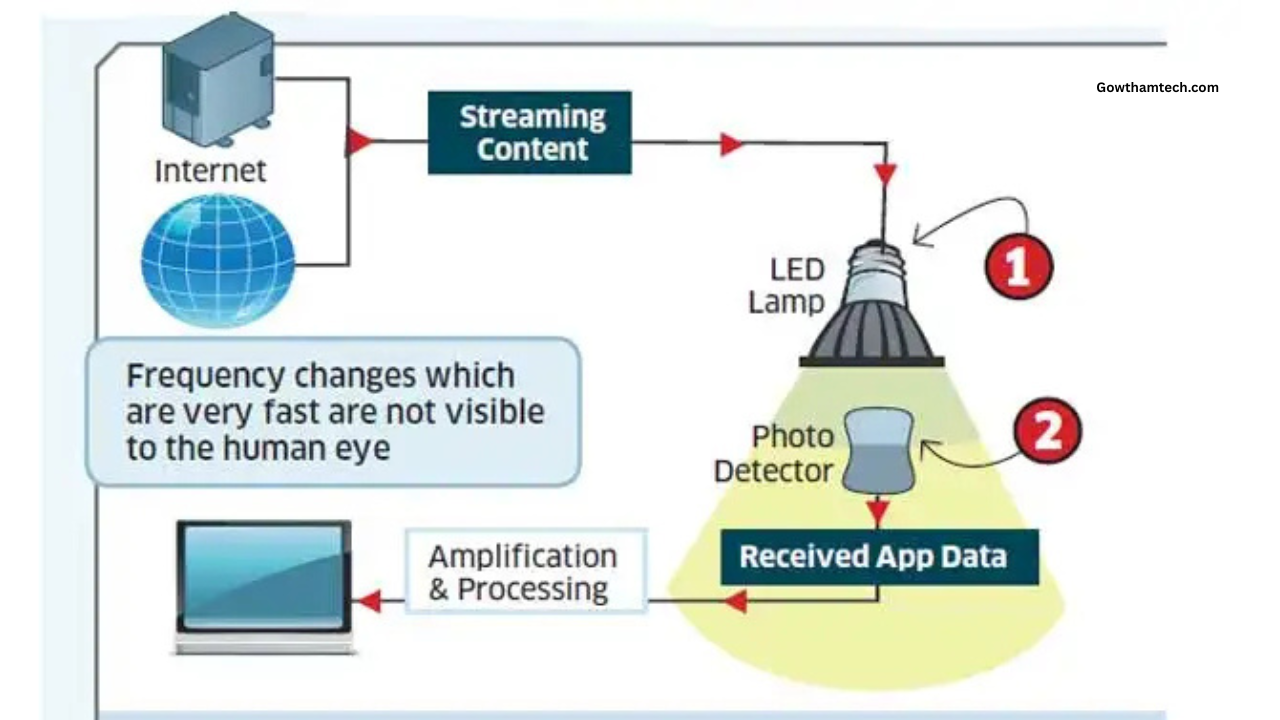
The basic idea of Li Fi is both sophisticated and very easy to understand. Li Fi leverages the infrastructure that is comprised of LED (Light Emitting Diode) illumination to build a fast data network. Although a typical LED bulb seems to display the appearance of a steady continuous light the fact that it is a solid state device lets it be switched off and on at extremely fast speeds millions or billions of seconds at a time.
The rate of flickering can be so fast that its completely invisible to the naked eye however it can be easily identified using a specially designed detector for photos. Li Fi makes use of this ability to send the data. Below is a list of essential components as well as the procedure:
- The Data Stream: The procedure begins with a data stream just as for any other network connection. The data stream is then fed to the Li Fi capable LED luminaire (light fixture).
- Modulation and Signal Processing: Within the luminaire is the signal processing unit resembles a modem uses digital information (the zeros and ones of computer languages) and modifies the source of light. It converts “1” into “LED ON” and “0 to “LED OFF”. The high frequency switch encodes the data in the light beam. It is a variant of Visible Light Communication (VLC).
- The downlink (Transmission) is the LED light that is modulated containing the information is sent through the LED bulb until the receiver device. Light based downlinks can reach incredible data speeds due to the fact that the spectrum of visible light is approximately 10000 times bigger than the radio frequency spectrum utilized for Wi Fi cell as well as all radio communication all.
- The photodetector (Receiver) is a receiving device like laptops or tablets comes with the capability of detecting photos. It could be a tiny USB dongle or sensor that is integrated to the chassis of the device. The camera detects the luminescence as well as “sees” the rapid flickering which is inaccessible to eye.
- Data Conversion and Demodulation Photodetector converts received light signals back to one electrical signal. The stream is demodulated and then transformed back into binary data which the device can be able to comprehend and apply.
- The Uplink (Sending the data back) for a complete connected bidirectional network that is bidirectional the device used by the user must also be able to transmit information back to the network. This typically happens with a low power LED transmitter installed in the device. This transmits a light modulated signal to a detector on the ceiling lamp. Two way communication is the thing that is what makes a truly Li Fi network work.
Fundamentally Li Fi turns every enabled light bulb into an access point wireless resulting in a fast dense network with the light source already present.
Li Fi 2025: Transitioning away from Niche to Mainstream
2025 will be a important year for Li Fi technology. The year marks the beginning of an era of groundbreaking research and niche pilot programs into the age of standardization and targeted commercial deployment.
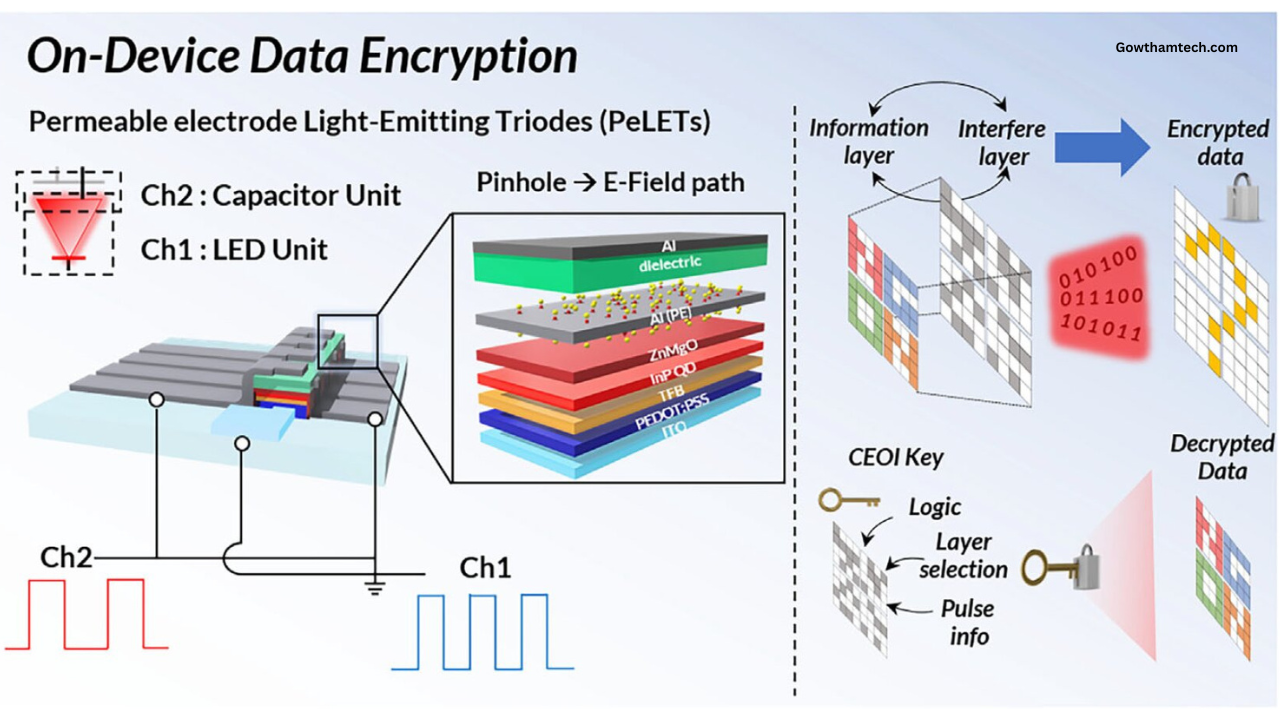
The technology is developing and is being shaped by major developments which are establishing Li Fis position as the next generation in wireless technology.
The Impact of Standardization: IEEE 802.11bb
One of the biggest milestones is the formal publication and acceptance of IEEE 802.11bb standard. The standard which is backed by the Light Communications Alliance essentially define Li Fi as a kind of Wi Fi operating in the spectrum of light. In addition to the current 802.11 Wi Fi standard that ensures compatibility between the various brands of equipment.
This is crucial in ensuring market confidence and a large scale use. That means that a device that has the 802.11bb compliant Li Fi receiver can seamlessly connect to any Li Fi access point in the same way the way phones connect to Wi Fi in the present.
Standardization of Li Fi is accelerating innovation and decreasing costs making Li Fi an investment that is more appealing for integrators as well as businesses.
From Prototypes to Products
In 2025 we will be experiencing a fresh generation of commercially available Li Fi products. Companies such as pureLiFi Signify (formerly Philips Lighting) and Oledcomm provide complete integrated solutions. They include:
- Li Fi enabled Luminaires: sleek contemporary LED lighting fixtures that incorporate transceivers and modems that can be used in offices school industrial or office environments.
- USB Dongles or Adapters High performance compact USB C dongles which instantly bring Li Fi functionality to laptops or tablet.
- Integrated Devices: The initial series of laptops and tablets that come with Li Fi transceivers are gaining traction with a focus on the enterprise and public sector. Though theyre not yet a standard feature with smartphones used by consumers This integration can be crucial proof of concept to be used in the near future.
Notable Deployments and Growing Interest
This technology is already being demonstrated through a range of challenging situations. For instance the U.S. Army has been one of the first to adopt it making use of Li Fi to establish safe jam proof communications networks within tactical operation centres.
There are deployments taking place within hospitals in which Li Fi allows for interference free communication around medical equipment that is sensitive. Manufacturing facilities are using the technology to regulate equipment in areas that have RF interference.
Though its not an established brand however the notable success in implementing Li Fi in these crucial areas is creating a strong argument in favor of its broader use.
The Unparalleled Advantages of Li Fi
Li Fi isnt just an improved version of WiFi. Its an entirely new technology with distinct advantages that take care of Wi Fis major flaws.
1. Massive Bandwidth and Uncongested Spectrum
The spectrum of radio frequencies is restricted licensed and getting increasingly overcrowded leading to inefficiency and slower speeds in dense settings. Li Fi is a part of the visible light spectrum thats unregulated and 10 times more powerful. This vast untapped resource offers the potential for multi Gigabit per second speeds easily accommodating the demands of 8K streaming virtual reality and massive IoT deployments without congestion.
2. Unmatched Security
The greatest benefit of Li Fi. The radio waves generated by Wi Fi can travel through walls. This means that the network could be access or attacked without a wall. However light is limited by physical barriers such as walls. If you cannot detect light its impossible to connect to the network. It creates a physically safe border around the network. It is ideal for financial institutions and corporate R&D laboratories that handle sensitive information This inherent security can be an absolute game changer. It is a Li Fi system is nearly invulnerable to hackers from the outside of the space its located within.
3. The freedom of Radio Frequency Interference (RFI)
Li Fi is insensitive to interference caused by radio frequency signals. It also most importantly it doesnt produce any RFI by itself. It is the perfect option for connections in environments that have radio frequencies which are unwelcome or are not permitted. For instance in the hospitals Li Fi wont interfere with MRIs or any other sensitive medical equipment. When flying Li Fi will provide fast connectivity to all passengers without impacting the critical communications and navigation system. When working in industrial settings the system can function with a high degree of reliability even in the presence of electromagnetic disturbances created by the heavy equipment.
4. High Density and Precision
Every light source with Li Fi connectivity is an access point that is specifically designed for. When a space has several lighting sources it is possible to create an incredible large network of tiny large high capacity areas (attocells).
It eliminates contention problems that are common in Wi Fi areas such as stadiums and conference rooms. In addition as the connection is linked to a particular lighting supply Li Fi enables highly accurate indoor positioning which can be precise as low as one centimeter much beyond what is possible using Wi Fi and Bluetooth.
5. Energy Efficiency and Dual Use
Li Fi makes use of the existing lighting infrastructure for LEDs which is currently being upgraded for energy efficiency. In addition to the data transmission capability to lighting it is an integrated system for dual use that can provide illumination with connectivity.
The synergy eliminates the requirement for additional energy consuming WiFi access points and leads to a more sustainable and efficient infrastructure for building in the long term. The introduction of Li Fi is in line with the worldwide movement to make sustainable technology more efficient.
Real World Applications and Use Cases for Li Fi in 2025
Although Li Fi will not be able to substitute Wi Fi for your home in the near future its widely used with its own unique advantages that give it a the most significant edge.
Image collages of Li Fi applications including a secured office as well as an airplane cabin and even a hospital room[Image collage of Li Fi applications: an airplane cabin a hospital room
Secure Corporate and Government Environments
In the defense department as well as intelligence agencies and the financial trade floors security of data is a top priority. Physically encapsulating Li Fi signals Li Fi signal can provide a level of security Wi Fi cant compare to. Boardrooms secure command centres as well as R&D laboratories can be outfitted with Li Fi to make sure that confidential messages and data transmissions cant be accessed by anyone the outside.
Hospitals and Healthcare
Hospitals make a great scenario to use Li Fi. There is a need for stable high speed connectivity to electronic health records medical imaging as well as telehealth consults is huge. However there is a lot of sensitive equipment. Li Fi offers a solution that offers high performance connectivity without danger of interference from electromagnetic fields with the life support system or diagnostic tools.
Aviation and In Flight Connectivity
The cockpit of an aircraft is a space that is where RF usage is tightly restricted. Li Fi is a reliable and reliable way to offer new generation entertainment in the air as well as connectivity. The reading lights in each seat could transform into a personal high speed connection that allows passengers to stream movies in high definition or take part in video conference without sharing the often slow satellite based Wi Fi.
Industrial IoT (IIoT) and Smart Manufacturing
Modern factories are full of electromagnetic noise as well as the need for stable and low latency communication to support robots and sensors. Li Fi is able to be able to cut through the noise offering reliable data links for monitoring and process control. Li Fi can also be utilized when the RF signal could pose an fire hazard for instance those in the oil and gas industry or mining activities. The application of Li Fi in the industry sector is an area that is rapidly expanding.
Underwater Communication
Radio waves cannot pass through water well which makes underwater communications an extremely difficult task. Light waves however are able to be absorbed by water which makes Li Fi the ideal solution for communicating between divers submarines and remotely controlled submarines (ROVs).
Smart Homes and Offices of the Future
In the future Li Fi promises to create better working and living environments. The lighting in your office could be an internet connection to your laptop as your homes intelligent lighting system will connect to every one of your IoT devices including your TV and your thermostat creating an incredibly unidirectional and secure network that is free of the traffic of the Wi Fi networks that your neighbors use.
The Challenges and Limitations of Li Fi
While it is a great technology Li Fi is not without some challenges. Thats the reason its considered an alternative in the wake of Wi Fi. It is not an entirely replacement.
- Line of Sight Requirement: The main crucial restriction is that the camera of the device receiving it requires the direct line of view towards the source of light. The light source is hindered by people walls as well as your own hand when it is covering the sensor. Though reflections of walls could aid in maintaining a connection however they are less reliable as Wi Fi when it comes to this.
- The Uplink Challenge The downlink (from the device to the light) is simple but sending a signal with high speed to the back up is more complicated. The transmitter for the uplink on the mobile phone must operate at a low power and precisely directed. Infrared based uplinks are the standard today constructing the most efficient and smooth uplink is a major area of Li Fi research and development.
- The suns rays could overwhelm the photodetector rendering it hard for the devices ability to discern the altered Li Fi signal from ambient lighting. Modern methods of filtering and processing signals are currently being developed to combat the problem however it could be difficult to use when the sun is directly shining.
- Infrastructure and Cost: Broad acceptance requires the installing of LEDs that are Li Fi compatible. Although new buildings can incorporate these from the beginning but retrofitting older buildings could represent a substantial cost. The price associated with Li Fi hardware despite declining remains greater than Wi Fi equivalent equipment until 2025.
- Lighting On Dependency This system is dependent on lights turning switched on. Even though Li Fi operates in dimming settings that are almost imperceptible (and could even utilize invisible infrared lights) The luminaires have to be on to transmit the data.
The Architecture of a Li Fi Network
The Li Fi infrastructure is designed on an infrastructure for lighting. It is comprised of the following components:
- Li Fi Access Points (APs) The APs are the LED luminaires equipped with built in Li Fi modems. Theyre the equivalent of Wi Fi routers.
- Li Fi Stations (STAs): These are the user devices equipped with a Li Fi dongle or integrated receiver/transmitter.
- Network Core Integration: Li Fi APs typically connect to the core IT network using Power over Ethernet (PoE) cables. PoE is perfect because it provides power to the lights and data connectivity via a regular Ethernet cable.
- Roaming and handover in a room with multiple Li Fi APs it is possible for the network to manage smooth handovers as the user travels from one zones of coverage for one light to the other and ensures a continuous connection. An efficient Li Fi system offers constant coverage over the whole space or the flooring.
This design creates a system of attocells minimal enclosed zones that provide dedicated high speed internet to the users who reside within them.
The Future of Li Fi: Whats Next?
The pace of innovation within the Li Fi area is growing rapidly. In the next 10 years we can expect amazing advancements.
- Fully integrated into devices It is the ultimate goal to get beyond dongles and include Li Fi transceivers integrated into each smartphone laptop as well as IoT devices as a standard function along with Wi Fi as well as Bluetooth chips.
- Micro LED Technology: Development of micro LEDs which are able to be switched on and off a thousand times more rapidly than conventional LEDs will push Li Fi speeds into the Terabits per second (Tbps) band.
- Receiver for Solar Panels: Work is in progress to make use of solar panels not only for power but also to serve for extremely fast Li Fi photodetectors. This may enable the outdoor IoT devices and possibly electric vehicles to get data while charging at the same time.
- City Wide Networks: The concept extends to the outdoors with the possibility of smart streetlights that provide citywide Li Fi connectivity to people walking transit and autonomous vehicle.
A Bright Future for Wireless Communication
In 2025 Li Fi has established itself as a robust and well established wireless technology. Li Fi is the ideal option for situations that require large bandwidth security and protection from electromagnetic interference. While it wont replace Wi Fi at every house but its use in industries the government transport and other industries is expected to grow dramatically.
In making our lighting infrastructure an efficient dual purpose system for illumination and communications Li Fi offers a sustainable and elegant way forward towards an almost infinite bandwidth.
Li Fi is much more than an ingenious idea. It is the foundational element of the future technology of wireless networks that are capable of handling the massive data needs of the coming years.
If youre ever switching on the light keep in mind that you could turn on a safe and ultra fast gateway into the world of digital. Connectivitys future isnt just bright its lit through Li Fi.




My Life Anusuyananth
Iloveu
Photo recovered
Potato