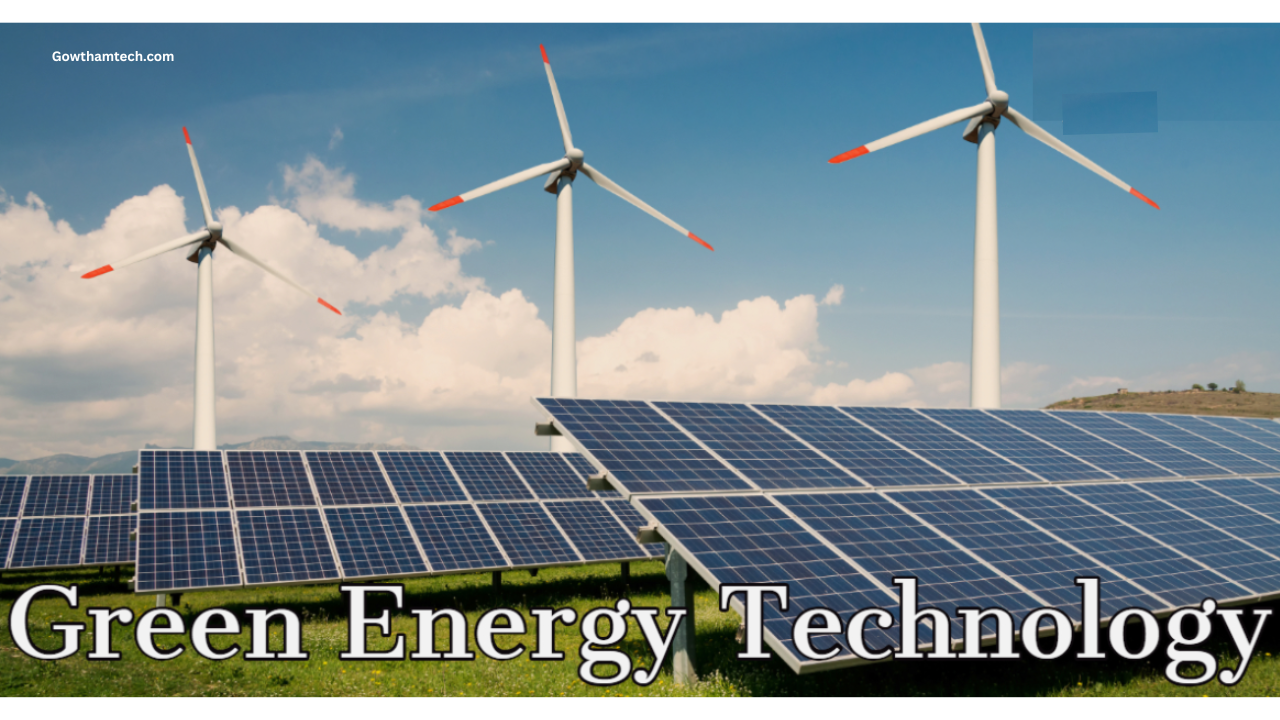
In 2025 the worldwide commitment to combating climate trade and fostering sustainable development has by no means been stronger. At the heart of this variation are Green Energy Technologies – progressive answers that harness renewable resources to produce strength with minimum environmental impact.
The shift faraway from fossil fuels isnt always simply an environmental plea; its an economic vital and pathway to strength independence and security.
This comprehensive manual delves into the numerous international of Green Energy Technologies providing insights into their contemporary reputation improvements advantages and future outlook.
From the sizzling sun to the deepest geothermal vents these technologies are redefining how we energy our houses industries and transportation. The endured evolution of Green Energy Technologies is vital for thriving planet.
Solar Power: Harnessing the Suns Abundance
Solar energy remains cornerstone of Green Energy Technologies changing daylight without delay into strength or warmth. Its substantial adoption is pushed through lowering costs growing performance and versatile packages.
1.1 Photovoltaic (PV) Systems: Direct Electricity from Light
PV systems are the most recognizable form of solar energy using semiconductor substances to convert photons into electrons.
- Monocrystalline and Polycrystalline Panels: While conventional silicon panels continue to enhance in efficiency and sturdiness monocrystalline panels commonly offer better efficiency due to their single crystal shape.
- Thin Film Solar Cells: These cells made from substances like cadmium telluride (CdTe) or copper indium gallium selenide (CIGS) are bendy lightweight and can be included into diverse surfaces expanding the architectural programs of Green Energy Technologies.
- Perovskite Solar Cells: unexpectedly emerging generation perovskites boast excessive efficiencies (approaching silicons) and lower manufacturing charges. Research in 2025 focuses on enhancing their balance and scalability for mass manufacturing potentially revolutionizing solar Green Energy Technologies.
- Bifacial Solar Panels: These panels seize sunlight from both their back and front aspects increasing general power yield in particular whilst set up over reflective surfaces or in ground set up arrays.
- Transparent Solar Cells: Imagine windows that generate strength! Transparent solar cells are in lively improvement providing thrilling prospects for building integrated photovoltaics (BIPV) giant leap forward for city Green Energy Technologies.
1.2 Concentrated Solar Power (CSP): Heat for Power Generation
CSP structures use mirrors to pay attention daylight onto receiver generating warmness that drives turbine to provide electricity.
- Parabolic Troughs: The maximum not unusual CSP generation the use of U formed mirrors to attention daylight onto valuable tube containing warmness transfer fluid.
- Solar Power Towers: Hundreds of mirrors (heliostats) tune the sun and reflect daylight onto receiver at the pinnacle of tower generating extraordinarily high temperatures.
- Thermal Energy Storage: key gain of CSP is its ability to save warmth taking into account energy generation even after the solar sets. Molten salt is famous medium for thermal energy garage making CSP greater dispatchable form of Green Energy Technologies.
1.Three Solar Thermal Collectors: Heating Water and Air
These structures without delay capture solar electricity for heating functions.
- Flat Plate Collectors: Absorb sunlight to warmness water for domestic use.
- Evacuated Tube Collectors: More efficient in chillier climates these creditors use vacuum sealed tubes to limit warmth loss an crucial issue of versatile Green Energy Technologies.
- Solar Air Heaters: Used for space heating or drying agricultural merchandise.
1.Four Advancements and Future of Solar Green Energy Technologies
- AI and Machine Learning Integration: Optimizing panel placement predicting output and handling grid integration for improved performance of Green Energy Technologies.
- Advanced Materials: New materials are constantly being researched to improve efficiency durability and value effectiveness.
- Decentralized Grids and Microgrids: Solar strength is good for localized energy manufacturing decreasing transmission losses and growing grid resilience key trend in distributed Green Energy Technologies.
- Agrivoltaics: Integrating sun panels with agriculture permitting land for use for both crop production and energy technology showcasing the multifunctional nature of Green Energy Technologies.
2. Wind Power: Tapping into Atmospheric Currents
Wind energy is mature and hastily increasing zone of Green Energy Technologies using the kinetic energy of wind to power turbines and generate strength.

2.1 Onshore Wind Farms: Land Based Turbines
Onshore wind farms are acquainted sight in lots of landscapes characterised via towering turbines grouped together.
- Turbine Design: Modern mills are large and more efficient with blades frequently exceeding 70 meters in length. Direct pressure mills are gaining traction due to their less complicated design and reduced preservation.
- Siting and Environmental Considerations: Careful siting is important to reduce visual impact noise pollution and ecological disruption. Advanced mapping and modeling equipment assist optimize turbine placement for max wind capture and minimal effect.
2.2 Offshore Wind Farms: Harnessing Ocean Winds
Offshore wind offers substantial blessings because of stronger and greater consistent winds leading to better potential factors.
- Fixed Bottom Turbines: Most cutting edge offshore wind farms use turbines installed on foundations fixed to the seabed appropriate for shallower waters.
- Floating Offshore Wind Turbines: recreation changer for deeper waters floating platforms permit mills to be deployed in areas formerly inaccessible unlocking tremendous new wind resources globally and expanding the reach of Green Energy Technologies. Research in 2025 focuses on fee discount and standardization of these structures.
- Transmission Challenges: Evacuating strength from offshore wind farms requires robust subsea cable infrastructure important location of investment for those Green Energy Technologies.
2.3 Innovations in Wind Green Energy Technologies
- Airborne Wind Energy (AWE): Kite like systems or drones that harness stronger greater consistent winds at better altitudes imparting probably modern approach to wind strength.
- Vertical Axis Wind Turbines (VAWTs): While much less commonplace than horizontal axis generators VAWTs are being explored for city environments and particular niche applications because of their decrease noise and capability to perform in turbulent winds.
- Turbine Recycling: Efforts are underway to improve the recyclability of turbine components especially blades addressing developing sustainability issue inside Green Energy Technologies.
- AI for Predictive Maintenance: Machine learning algorithms analyze turbine performance facts to are expecting capacity disasters reducing downtime and operational charges.
- Hybrid Systems: Combining wind with solar and battery storage creates more dependable and dispatchable strength an included approach to Green Energy Technologies.
3. Hydropower: The Power of Water Flow
Hydropower one of the oldest and maximum dependable Green Energy Technologies harnesses the energy of flowing or falling water to generate electricity.
3.1 Conventional Hydropower: Large Scale Dams
Large dams create reservoirs freeing water through mills to generate strength.
- Reservoir Hydropower: Offers dispatchable power and might shop strength offering grid stability. However large dams may have extensive environmental and social impacts such as habitat disruption and displacement of groups.
- Run of River Hydropower: Diverts part of rivers waft via turbine and returns it downstream with less environmental effect than huge dams because it doesnt require massive reservoir.
3.2 Small and Micro Hydropower: Decentralized Solutions
These structures are perfect for far off communities or localized strength generation.
- Small Hydro: Projects with capacities usually among 1 MW and 30 MW.
- Micro Hydro: Projects beneath hundred kW frequently used for off grid programs showcasing the versatility of Green Energy Technologies in remote settings.
- Pico Hydro: Even smaller systems usually below five kW able to powering character homes or small communities.
three.Three Emerging Hydrokinetic Technologies: Tides and Waves
These technologies capture power from the herbal motion of water bodies without requiring massive dams.
- Tidal Power:
- Tidal Barrages: Similar to dams however constructed across tidal estuaries to harness the incoming and outgoing tides.
- Tidal Stream Generators: Underwater turbines that convert the kinetic electricity of tidal currents into electricity much like submerged wind generators. These are much less environmentally disruptive than barrages and represent promising future for Green Energy Technologies.
- Wave Power: Devices that capture energy from the motion of ocean waves. Technologies include point absorbers oscillating water columns and overtopping devices. While still in early ranges of commercialization wave power holds huge ability as dependable supply of Green Energy Technologies.
three.Four Future of Hydropower Green Energy Technologies
- Environmental Mitigation: Focus on minimizing ecological impacts of present and new tasks.
- Hybrid Systems: Combining hydropower with intermittent renewables like sun and wind for grid balancing.
- Pumped Hydro Storage: Using extra power (e.G. from solar or wind) to pump water uphill to reservoir then releasing it to generate energy when wished acting as massive battery for Green Energy Technologies. This is vital solution for grid stability.
four. Geothermal Energy: Earths Internal Heat
Geothermal electricity harnesses the heat from within the Earths crust for energy generation and direct heating. Its constant and reliable source of Green Energy Technologies.
four.1 Geothermal Power Plants: Electricity Generation
These plants faucet into excessive temperature geothermal reservoirs to produce steam that drives mills.
- Dry Steam Plants: Use steam at once from the geothermal reservoir to show mills.
- Flash Steam Plants: Hot water from the reservoir is depressurized (“flashed”) into steam which then drives generators.
- Binary Cycle Plants: Use decrease temperature geothermal fluid to heat secondary working fluid (with decrease boiling point) that then flashes to steam to pressure turbine. This expands the geographic viability of Green Energy Technologies.
four.2 Enhanced Geothermal Systems (EGS): Expanding Access
EGS generation aims to create geothermal reservoirs in areas wherein they do not naturally exist by injecting water into warm dry rock to create fractures and extract warmness. This technology has the potential to unlock sizable geothermal resources globally making it key vicinity of improvement for Green Energy Technologies.
4.Three Direct Use Geothermal: Heating and Cooling
Geothermal energy may be used immediately for variety of purposes without conversion to power.
- Space Heating and Cooling: Geothermal warmness pumps (GHPs) circulate fluid through underground loops to switch warmness to or from the floor providing green heating and cooling for buildings. This is enormously green shape of Green Energy Technologies.
- District Heating: Supplying warmness to couple of homes from significant geothermal supply.
- Agricultural and Industrial Applications: Heating greenhouses aquaculture ponds and for various industrial procedures.
4.4 Advancements and Challenges in Geothermal Green Energy Technologies
- Drilling Technology: Improvements in drilling strategies are critical for decreasing expenses and getting access to deeper hotter assets.
- Seismic Monitoring: Advanced tracking systems are crucial for EGS projects to manage and mitigate ability induced seismicity.
- Resource Assessment: Improved geological modeling and exploration strategies are enhancing the identity of feasible geothermal websites contributing to the increase of Green Energy Technologies.
- Closed Loop Systems: These structures recirculate working fluids without direct interplay with the geothermal reservoir reducing environmental effect and lengthening reservoir lifestyles sustainable technique for Green Energy Technologies.
5. Bioenergy: Power from Organic Matter
Bioenergy derived from organic count number (biomass) offers versatile range of Green Energy Technologies producing warmness energy and biofuels.
five.1 Biomass Combustion: Direct Burning
Directly burning biomass (wood agricultural residues devoted power vegetation) to produce heat or steam for energy era.
- Combined Heat and Power (CHP): Efficiently generates each strength and useful warmth from biomass.
- Sustainable Sourcing: Crucial to make sure biomass is sourced sustainably to keep away from deforestation and compete with meals production.
5.2 Biofuels: Renewable Transportation Fuels
Liquid or gaseous fuels derived from biomass.
- Bioethanol: Produced mainly from corn sugarcane or cellulosic biomass used as gasoline additive or substitute.
- Biodiesel: Produced from vegetable oils or animal fat used as diesel alternative.
- Advanced Biofuels: Focus on non food feedstocks (algae agricultural waste municipal stable waste) and greater efficient conversion strategies to overcome “food vs. Gasoline” issues and decorate the sustainability of Green Energy Technologies.
- Sustainable Aviation Fuel (SAF): key place of development for decarbonizing the aviation zone produced from numerous biomass sources.
5.Three Biogas and Biomethane: Anaerobic Digestion
- Anaerobic Digestion: Organic waste (manure food waste sewage sludge) is damaged down by means of microorganisms within the absence of oxygen producing biogas (mainly methane and carbon dioxide).
- Biogas Applications: Used for energy era warmth or upgraded to biomethane (renewable natural fuel) for car gas or injection into natural gas grids making it flexible issue of Green Energy Technologies.
- Waste to Energy: This method not simplest generates strength but additionally manages waste supplying twin benefit.
five.4 Pyrolysis and Gasification: Thermal Conversion
- Pyrolysis: Heating biomass within the absence of oxygen to provide bio oil biochar and syngas. Bio oil can be upgraded into fuels.
- Gasification: Heating biomass with limited oxygen to produce syngas (a mixture of hydrogen carbon monoxide and methane) which can be used to generate strength or produce liquid fuels.
5.5 Challenges and Opportunities in Bioenergy Green Energy Technologies
- Feedstock Availability and Sustainability: Ensuring reliable and sustainable supply of biomass with out impacting meals safety or land use.
- Conversion Efficiency: Improving the performance of biomass conversion methods to maximize power yield.
- Carbon Capture and Storage (CCS) with Bioenergy (BECCS): If the CO2 released all through bioenergy use is captured and stored BECCS can become carbon bad era effective device in weather mitigation and important improvement for Green Energy Technologies.
6. Energy Storage: The Key to Reliable Green Energy Technologies
The intermittency of many Green Energy Technologies (like solar and wind) necessitates robust power storage answers for grid stability and reliability.
6.1 Battery Storage: Rapidly Evolving Technology
- Lithium Ion Batteries: Dominant in grid scale storage electric cars and client electronics because of their excessive electricity density and efficiency. Advancements awareness on enhancing lifespan safety and decreasing fees.
- Solid State Batteries: Emerging technology promising higher electricity density faster charging and advanced safety in comparison to traditional liquid electrolyte lithium ion batteries.
- Flow Batteries: Utilize liquid electrolytes stored in outside tanks taking into consideration independent scaling of strength and strength. They offer lengthy cycle lifestyles and are suitable for long period grid storage an vital thing of resilient Green Energy Technologies.
- Sodium Ion Batteries: Gaining traction as decrease value alternative to lithium ion the usage of extra considerable substances increasing accessibility for Green Energy Technologies.
6.2 Mechanical Storage: Proven and Scalable
- Pumped Hydro Storage (PHS): The maximum mature and widely used big scale strength storage technology as cited previously.
- Compressed Air Energy Storage (CAES): Uses excess energy to compress air and save it in underground caverns. When strength is needed the compressed air is released to power turbine.
- Flywheels: Store power as rotational kinetic strength. Suitable for brief period high power applications which include grid stabilization and electricity excellent manage.
6.3 Thermal Energy Storage: Heat for Later Use
- Molten Salt Storage: Commonly used in CSP vegetation to store warmth bearing in mind dispatchable energy generation.
- Phase Change Materials (PCMs): Store and launch thermal electricity for the duration of phase transitions (e.G. melting and freezing) utilized in constructing heating/cooling and industrial techniques.
6.4 Hydrogen: The Versatile Energy Carrier
- Green Hydrogen: Produced through electrolysis of water the use of renewable strength. It can be stored transported and used in gas cells to generate power or as clean fuel for business methods and transportation. Hydrogen is visible as key enabler for deep decarbonization across various sectors drastically impacting the destiny of Green Energy Technologies.
- Hydrogen Storage: Challenges include green and safe garage (compressed gas liquid hydrogen or solid nation materials).
6.5 Future of Energy Storage for Green Energy Technologies
- Long Duration Storage: Critical for integrating high penetrations of intermittent renewables. Research focuses on new battery chemistries hydrogen and advanced mechanical solutions.
- Smart Grid Integration: Storage systems are more and more integrated into clever grids enabling demand response frequency regulation and voltage guide.
- Vehicle to Grid (V2G): Electric cars can act as cellular electricity garage units feeding power back to the grid during height demand.
7. Smart Grids and Digitalization: Optimizing Green Energy Technologies
The successful integration of various Green Energy Technologies requires smart and adaptive electricity grids. Smart grids leverage digital communication and manage technology to optimize electricity production distribution and consumption.
7.1 Key Features of Smart Grids
- Two Way Communication: Enables actual time information alternate among utilities and clients taking into consideration dynamic pricing and call for aspect management.
- Advanced Metering Infrastructure (AMI): Smart meters provide specific intake facts empowering clients and enhancing grid control.
- Automated Control and Self Healing: The grid can routinely come across and isolate faults rerouting electricity to reduce outages.
- Integration of Distributed Energy Resources (DERs): Seamlessly connects rooftop solar battery storage and electric vehicles to the grid remodeling customers into prosumers and improving the resilience of Green Energy Technologies.
- Cybersecurity: vital issue of smart grids protective towards cyber threats to make sure reliable operation of all Green Energy Technologies.
7.2 The Role of AI and IoT in Green Energy Technologies
- Predictive Analytics: AI fashions forecast renewable power output (sun and wind) and call for optimizing grid operations and lowering the want for fossil gas backups.
- Optimized Energy Management: Internet of Things (IoT) gadgets in houses and groups can intelligently control strength intake based totally on actual time grid conditions and costs maximizing the benefits of Green Energy Technologies.
- Decentralized Control: Blockchain generation is being explored for steady and obvious peer to peer electricity trading within nearby grids.
7.Three Microgrids and Energy Communities
- Microgrids: Localized electricity grids that can perform independently from the principle grid imparting greater resilience in the course of outages. They are regularly powered through combination of Green Energy Technologies and garage.
- Energy Communities: Groups of citizens local government or small groups that collectively generate consume and control their personal renewable energy fostering neighborhood ownership and financial blessings from Green Energy Technologies.
eight. Policy Economics and Investment in Green Energy Technologies
The speedy growth of Green Energy Technologies is strongly inspired by supportive regulations favorable economics and increasing investment.
8.1 Supportive Policies and Regulations
- Carbon Pricing and Emissions Trading Schemes: Incentivize the reduction of greenhouse gasoline emissions with the aid of making fossil fuels extra costly as consequence promoting Green Energy Technologies.
- Renewable Energy Targets and Mandates: Set clear desires for renewable strength deployment driving investment and innovation.
- Subsidies and Tax Credits: Reduce the in advance fee of Green Energy Technologies for customers and builders.
- Net Metering and Feed in Tariffs: Compensate prosumers for electricity fed back into the grid encouraging rooftop sun and different allotted Green Energy Technologies.
- Streamlined Permitting: Reducing bureaucratic hurdles can accelerate assignment development.
eight.2 Decreasing Costs and Economic Competitiveness
- Levelized Cost of Electricity (LCOE): The LCOE of sun and wind energy has fallen dramatically making them competitive with and frequently less expensive than new fossil gasoline strength plants in lots of regions. This financial advantage is primary motive force for the expansion of Green Energy Technologies.
- Job Creation: The renewable power region is big source of recent jobs in manufacturing installation operation and renovation.
8.Three Investment Trends
- Increased Private Investment: Venture capital private equity and corporate investments are pouring into Green Energy Technologies and related improvements.
- Green Bonds and Sustainable Finance: Financial units specifically designed to fund environmentally friendly initiatives are developing in reputation.
- Divestment from Fossil Fuels: Institutional investors are an increasing number of divesting from fossil fuel property and reallocating capital to Green Energy Technologies.
nine. The Global Impact and Future Outlook of Green Energy Technologies
The large adoption of Green Energy Technologies is having profound impact globally shaping economies environments and societies.
9.1 Environmental Benefits
- Reduced Greenhouse Gas Emissions: The number one gain immediately combating climate exchange with the aid of changing fossil fuels.
- Improved Air Quality: Decreased emissions of pollution like SOx NOx and particulate matter main to better public health.
- Reduced Water Usage: Many Green Energy Technologies (like solar PV and wind) require significantly much less water than fossil gasoline or nuclear electricity vegetation.
9.2 Economic Benefits
- Energy Independence and Security: Reduces reliance on volatile fossil fuel markets and strengthens national energy safety.
- Rural Development: Many renewable energy initiatives particularly wind and solar are placed in rural areas bringing jobs and monetary advantages to those communities.
- Technological Innovation: Drives research and development in new substances systems and clever grid solutions.
9.3 Social Benefits
- Access to Energy: Decentralized Green Energy Technologies can offer electricity to far off and underserved groups enhancing great of life and fostering monetary development.
- Public Health Improvements: Cleaner air and water make contribution to higher health results.
nine.4 Future Trends in Green Energy Technologies
- Hybrid Power Plants: Combining more than one Green Energy Technologies (e.G. solar wind and garage) to provide extra solid and reliable power.
- Power to X: Using renewable power to provide other power providers or merchandise which includes hydrogen (power to gas) artificial fuels (power to liquid) or chemicals.
- Circular Economy Principles: Increasing attention at the whole lifecycle of Green Energy Technologies from sustainable fabric sourcing to recycling and repurposing additives.
- Global Collaboration: International partnerships are important for accelerating research deployment and standardization of Green Energy Technologies.
- Increased Electrification: Electrification of transportation (EVs) and business approaches will notably increase power call for making the expansion of Green Energy Technologies even more critical.
Unstoppable Momentum of Green Energy Technologies
The year 2025 stands as pivotal second inside the power transition. Green Energy Technologies are no longer niche solutions; theyre mainstream economically aggressive and increasingly more essential for sustainable destiny. From the boundless energy of the sun and wind to the regular electricity of water and Earths warmth those technology are remodeling our electricity panorama.
The ongoing innovations in strength storage smart grids and coverage frameworks are always improving their effectiveness and reliability. As we appearance in advance the continuing evolution and substantial adoption of Green Energy Technologies will not handiest mitigate the existential risk of climate change but additionally construct extra resilient equitable and wealthy international for generations to come. The future is undoubtedly green powered by an ever advancing array of Green Energy Technologies. The dedication to Green Energy Technologies is stronger than ever.




Photos
9342488348
Sagar